Sexual Health
Last Modified 29/09/2026 11:53:17
Share this page
Overview of page
Sexual health is an important part of overall health and wellbeing. The World Health Organization defines sexual health as:
“a state of physical, emotional, mental and social well-being in relation to sexuality; it is not merely the absence of disease, dysfunction or infirmity. Sexual health requires a positive and respectful approach to sexuality and sexual relationships, as well as the possibility of having pleasurable and safe sexual experiences, free of coercion, discrimination and violence. For sexual health to be attained and maintained, the sexual rights of all persons must be respected, protected and fulfilled.”1
The local authority has a mandated responsibility to commission comprehensive, open access and confidential sexual and reproductive health services.2 This includes free provision of contraception, free sexually transmitted infections (STI) testing, treatment and partner notification to sexual partners of infected persons. These services are key to prevent and control outbreaks of infection and reduce unwanted pregnancies. Both residents and non-residents are able to use Blackpool’s sexual health services (SHS).
Sexual ill health is not equally distributed among the population, specific population groups face a greater burden of poor sexual health, through higher risk and poorer access to sexual healthcare.3 These groups include:
-
Young people aged 15-24
-
Gay, bisexual and all men who have sex with men (GBMSM)
-
People from Black ethnic backgrounds
-
Individuals living with human immunodeficiency virus (HIV)
-
Marginalised or vulnerable groups such as
- Children in care
- Sex workers
- Survivors of sexual and domestic abuse
- Victims of trafficking
STIs are primarily transmitted through sexual activities, including genital contact. The use of condoms remains an essential method to reduce the risk of STIs and as a contraceptive method. Regular sexual health screens at SHS and through self-testing provide an awareness of infection status, and opportunities for early identification and treatment, which is key for maintaining good sexual health.
The recommended testing frequencies for people without symptoms vary depending on risk group, all people having condomless sex with new or casual partners should be screened on an annual basis, which increases up to three-monthly testing intervals for GBMSM.4 Other medical interventions to reduce the transmission of STIs encompass pre-exposure prophylaxis (PrEP) to reduce the risk of HIV, doxycycline post-exposure prophylaxis (doxyPEP) to reduce risk of syphilis and chlamydia, as well as targeted vaccines for mpox, human papillomavirus (HPV) and gonorrhoea.
Women aged under-25 should be screened for chlamydia on changing sexual partner, or on an annual basis; there is an opportunistic approach to testing through the National Chlamydia Screening Programme (NCSP). Testing and partner notification are essential elements of STI management and control, protecting patients and partners from re-infection and long-term consequences from untreated infection, which will reduce onwards transmission and costs associated with complications.
This Sexual Health Joint Strategic Needs Assessment (JSNA) 2026 presents an overview of sexual health needs and service provision in Blackpool - reviewing current data and historic trends both locally, and in comparison to regional and national figures. The 2023-2026 Sexual Health strategy has the vision to support everyone to achieve optimal sexual health and wellbeing and provides a strategic framework to shape the planning and delivery of services and interventions to deliver its vision. This JSNA will support the development of the subsequent Sexual Health Strategy and Action Plan for Blackpool.
For the most recent summary of Blackpool’s sexual health data, please click here for the Summary Profile of Local Authority Sexual Health for Blackpool, published by the Office for Health Improvement & Disparities.
-
Gonorrhoea is the second most common STI and some strains of the bacteria have developed resistance to the antibiotics used to treat it. This antimicrobial resistance is a global public health concern and enhanced surveillance through the Gonococcal Resistance to Antimicrobials Surveillance Programme (GRASP) is key to identify resistance and monitor trends, alongside following the UK’s five year action plan for antimicrobial resistance (2024-2029).5 An opportunistic vaccination programme of the 4CmenB (Meningitis B vaccine) has been implemented at specialist SHS for GBMSM at higher risk of gonorrhoea infection since August 2025. This reduces the risk of gonorrhoea through some cross-protection provided due to the closely related bacteria.6
-
Syphilis has re-emerged as a STI and cases continue to rise, 2024 saw the highest numbers in England since the 1940s. In 2025, doxyPEP was introduced - a post-exposure prophylaxis which aims to prevent syphilis and chlamydia cases.7 Between August and December 2025, 24,396 attendances at sexual health clinics were linked to prescriptions of doxyPEP which suggests strong uptake of the new intervention.8 The UK Health Security Agency Syphilis Response Plan outlines the response to the recent rise in cases.
-
Mpox is an infection causing flu-like symptoms and rash, it has been present in low numbers in the UK since 2022.9 There are 2 types of mpox, Clade 1 and Clade 2, the risk of transmission of mpox is low for most people, it spreads through close physical contact, coughs or sneezes and touching infected objects, clothing or bedding. There is now a vaccine available for people at higher risk which can be accessed at SHS.
-
Shigella is a gastrointestinal infection that causes diarrhoea, stomach pain and fever. It can be passed on during sex (often between men) if traces of faeces containing the bacteria are ingested or via unwashed hands. Recent concerns were raised in 2023, due to extremely antibiotic-resistant strains of Shigella.10 In 2025, the rate of sexually transmitted shigella in Blackpool was 17 per 100,000 males (aged 16 and over). It is not currently identified as an emerging issue in the local authority.11
-
Sexual health services (SHS) continued to operate during the COVID-19 pandemic, but underwent major service adaptations. These included reduced face-to-face capacity (with the exception for those with urgent clinical need) and expanded provision of remote care, increase in postal STI testing kits, and telephone appointments for contraception. As a result, the majority of sexual health indicators reported in 2020 and 2021 are notably lower than previous years. Whilst diagnoses for several STIs returned to, and in some cases exceeded pre-pandemic levels by the end of 2022, trends across this time should be interpreted with caution, as this is likely to reflect both changes in service access and healthcare-seeking behaviour, rather than a true change in the burden of infection.12
Please note: data on STIs, contraception, termination of pregnancy and sexual violence are monitored using different surveillance systems, which are released at different times. Different levels of detail are published in separate reports, therefore the data discussed is from a variety of years. The STI section of this report has been compiled using data from SHS reported to UKHSA via the GUMCAD STI Surveillance System and data on chlamydia testing and diagnoses from all settings reported to UKHSA via the CTAD Chlamydia Surveillance System.
Across England, there were 334,151 new STI diagnoses made at sexual health clinics in 2025. Of these, the most commonly diagnosed STIs were chlamydia (45%), gonorrhoea (19%), genital warts (7%), and genital herpes (9%).
In 2025 in Blackpool:
There were 1,327 new STIs diagnosed (920 per 100,000) (figure 1), significantly higher than England (570) and the North West region (529). This is the third highest rate in North West behind Manchester and Salford, and is the 24th highest rate out of 152 upper tier local authorities.
Figure 1: new STI diagnoses per 100,000 (persons, all ages), 2012 to 2025 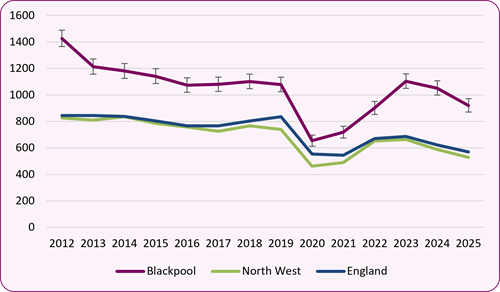 Source: OHID - Fingertips Sexual Health Profile
The rate of new STI diagnoses (excluding chlamydia in those under 25-years) was 697 (per 100,000), significantly higher than England (441) and the North West (399). Figure 2 shows this trend has remained consistently higher. Between 2012 and 2019, rates fluctuated but remained fairly level. A marked reduction is observed in 2020, likely reflecting reduced testing and service access during the COVID-19 pandemic, followed by a steady recovery through 2021 to a peak in 2023. Since 2023, rates of new STI diagnoses have levelled. This follows a similar pattern to figure 1, however the decline from 2023 to 2025 is notably steeper, suggesting a considerable reduction in chlamydia diagnoses in those aged under 25.
Figure 2: new STI diagnoses (excluding chlamydia aged 24 years and under) per 100,000 (persons, all ages), 2012 to 2025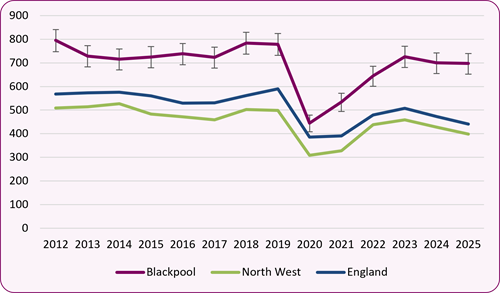 Source: OHID - Fingertips Sexual Health Profile
STI breakdown by age, sex and sexual orientation
Please note: to allow for a more detailed breakdown, this section uses 2024 data and is not comparable with the 2025 values above.
Of the new STI diagnoses in Blackpool in 2024, 49% (749) were among people aged under 25 years. Of those who had a recorded sex (578), 35.3% were male (204) and 64.7% were female (374). In contrast, among those aged 25 years and over, 63.9% of new diagnoses were in males (484/757) and 36.1% in females (273/757). Figure 3 demonstrates a clear, age and gender pattern, with the highest burden of new STI diagnoses occurring among females aged 20 to 24 years and males 25 to 34 years in Blackpool. Across England a similar pattern is observed, with females accounting for a greater proportion of diagnoses in younger age groups, which is in part due to young women being more likely to participate in routine testing, for example in the National Chlamydia Screening Programme (NCSP).
Figure 3: new STI diagnoses by age group, 2024 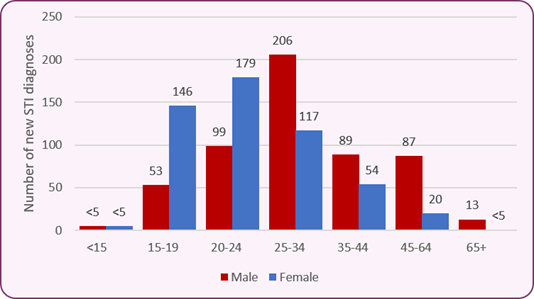 SPLASH report (2026) Sexual and Reproductive Health Profiles, UKHSA
For all STIs, almost half of the 1,517 diagnosed in 2024 were for chlamydia (48.3%), with gonorrhoea being the next most prevalent (18.3%) (figure 4). Looking at the top five diagnosed STIs (excluding 'all other' STIs), 46.7% were diagnosed in females, 49.4% in males and 4% with no sex recorded.
Figure 4: STI diagnoses in Blackpool, 2024 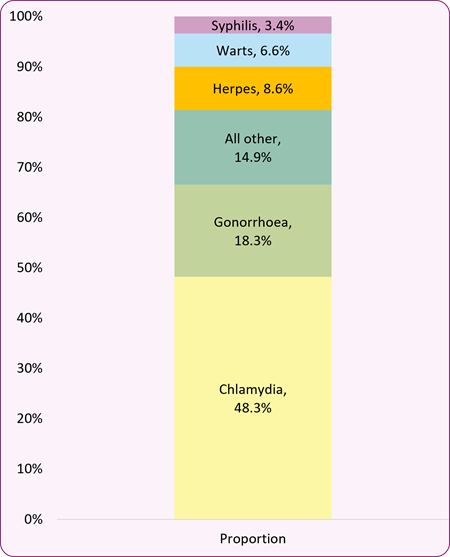 SPLASH report (2026) Sexual and Reproductive Health Profiles, UKHSA
Breaking this down further by STI, figure 5 shows that the majority of syphilis, gonorrhoea and warts diagnoses were in males. Females had a higher incidence of chlamydia and herpes.
Figure 5: top five STI diagnoses in Blackpool by sex, 2024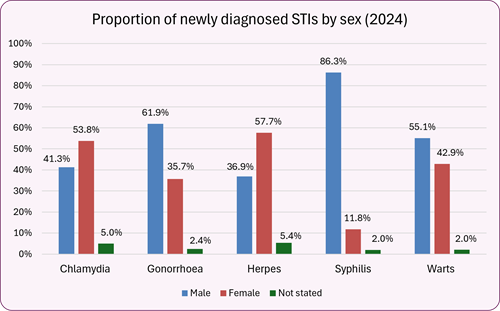 SPLASH report (2026) Sexual and Reproductive Health Profiles, UKHSA
Looking at sexual orientation, figure 6 shows the breakdown by STI for males. Variations in identified sexual orientation across different STIs can be clearly seen, with 70.5% of new syphilis diagnoses being in men who identify as gay, compared to 25.8% for chlamydia.
For cases in men where sexual orientation was known, 39.8% of all new STIs in Blackpool were among GBMSM, compared to 49.1% in England.13 There is national concern surrounding rises in syphilis and gonorrhoea diagnoses, these conditions are more prevalent among GBMSM communities and ongoing targeted efforts to reduce transmission are required.
Figure 6: number and proportion of STIs in males by identified sexual orientation, 2024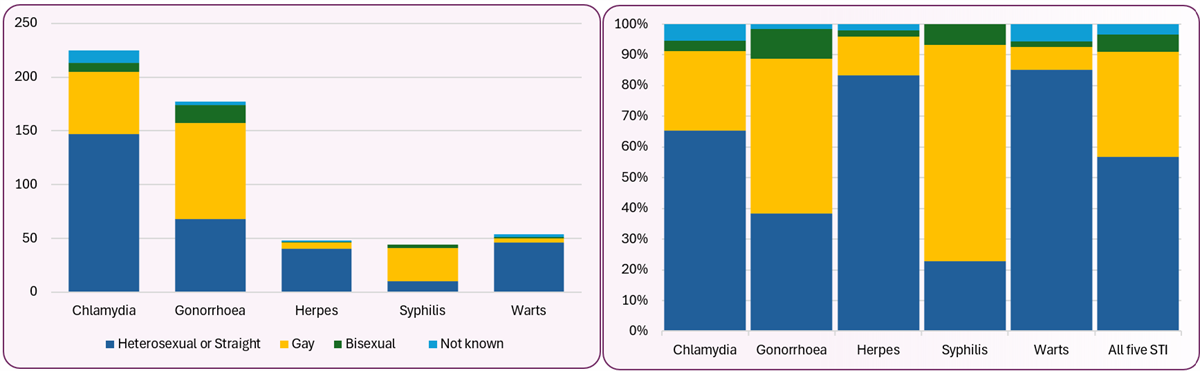 Source: Data from GUMCAD surveillance system, UKHSA
For females, the majority of new diagnoses across all five STIs is in heterosexual women. Women who identify as lesbian have a higher rate of syphilis diagnoses compared to the other four STIs (figure 7).
Figure 7: number and proportion of STIs in females by identified sexual orientation, 2024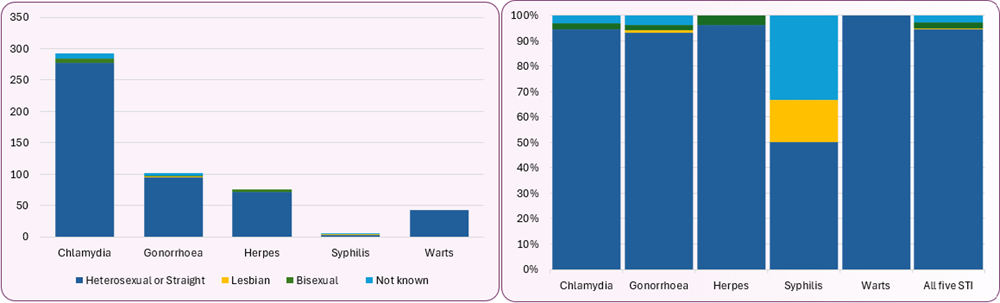 Source: Data from GUMCAD surveillance system, UKHSA
Figures 8 - 20 show the trends by individual sexually transmitted infection. These are per 100,000 of the stated age group (and sex where relevant) and use the most recent data to 2025.
Chlamydia
Chlamydia is the most common STI in England. Chlamydia test coverage data reflects the number of tests conducted rather than the number of individuals tested. Nationally, the proportion of young people screened for chlamydia has declined since 2012, followed by a rise in detection rates for females in response to changes to the NCSP in 2021, and as a result the coverage indicator now relates to females only.
Across England, screening coverage among young women for chlamydia has fallen from around 21% in 2021 to 16% in 2025. In contrast, Blackpool has seen an upward trend over the same time period, with coverage increasing from 18.6% to 27.8%. This has been attributed to the accessibility of our services, and ongoing sexual health promotion across the young people’s public health network, as well as a dedicated position working with schools/colleges and youth groups.
Figure 8: proportion of females aged 15 to 24 years screened, Blackpool, North West and England, 2021 to 2025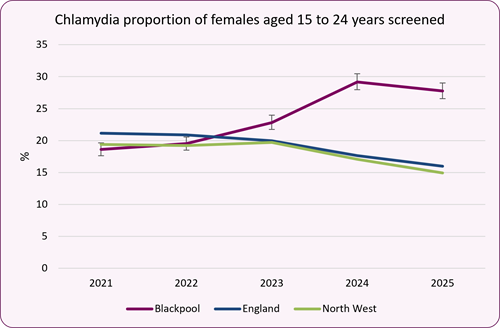 Source: OHID - Fingertips Sexual Health Profile
Diagnosis rates in Blackpool have fallen from 826 in 2012 to 404 in 2025 (all ages) with a drop across the COVID-19 pandemic period, and after a small increase, has continued to drop again.
For those aged 25 and over, whilst England’s rates declined between 2023-2025 from 215 to 182, the diagnosis rate in Blackpool increased from 207 to 248, suggesting a growing difference in infection rates among adults aged over 25. Understanding changes in the infection rates is key to identifying and addressing the impact in different populations.
Figure 9: trend in chlamydia diagnoses, 25 and over, Blackpool and England, 2012 to 2025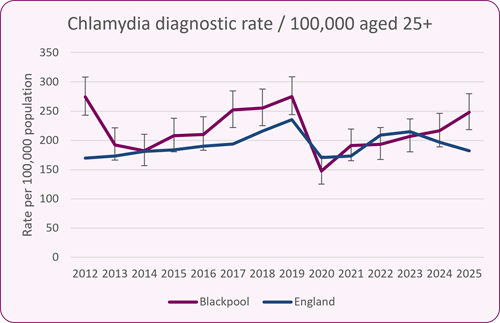 Source: OHID - Fingertips Sexual Health Profile
The burden of infection is greatest among people aged under-25, who account for most diagnoses and drive the overall trend. A higher detection rate is indicative of successful screening and testing programmes. Detecting and treating enough asymptomatic infections can help to reduce transmission of chlamydia, although the detection rate alone does not measure the overall burden of disease.
The United Kingdom Health Security Agency (UKHSA) recommends that local authorities should be working towards a detection rate of at least 3,250 diagnoses per 100,000 young women aged 15 to 24 years. In 2025, in Blackpool this was 2,597, higher than England’s detection rate of 1,348 but still below the recommended rate. The chart below shows Blackpool's detection rate (all people) is significantly higher than the North West and England.
Figure 10: trend in chlamydia detection, under-25, Blackpool, North West and England, 2012 to 2025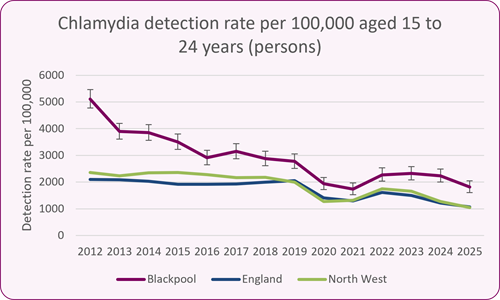 Source: OHID - Fingertips Sexual Health Profile
The National Chlamydia Screening Programme (NCSP) was established in 2003 to allow early detection and treatment of asymptomatic chlamydia infection to reduce harms from untreated infection and prevent onward transmission. Chlamydia is the most common bacterial STI in England and at least 70% of women and 50% of men with the infection do not have symptoms.14
If these infections remain undiagnosed and untreated, complications such as pelvic inflammatory disease, ectopic pregnancy and infertility can develop. Effective chlamydia screening, when combined with sexual health promotion, can improve sexual health outcomes among young people. Screening programmes also provide an important opportunity to offer broader sexual health interventions, including condom promotion, partner notification, contraception advice and referral to specialist services.
Following an evidence review of the NCSP, as the harmful complications of untreated chlamydia infection can affect women disproportionately, since 2021 the NCSP focuses predominantly on screening young women.15 Women can also access opportunistic testing offered through community settings including GPs and pharmacies. All young people are still able to access chlamydia tests at SHS.
Gonorrhoea
The trend in new gonorrhoea diagnosis rates in Blackpool has broadly mirrored those seen nationally, with an overall upward trend to a peak in 2022 - from 47.0 in 2012 to 216.7 (307 diagnoses), before declining to 160.9 in 2025 (232 diagnoses). Rates in Blackpool have remained consistently and significantly higher than England (109.1).
Nationally, gonorrhoea diagnoses have also fallen, decreasing from 85,370 cases (147.2 per 100,000 population) to 63,943 in 2025. Although this downward trend is encouraging, the burden of disease remains high and continued efforts for prevention, testing, prompt treatment and partner notification are essential to further reduce transmission. Gonorrhoea infections are predominantly concentrated in core risk groups, particularly in GBMSM and people of Black Caribbean ethnicity.
Continued efforts to reduce transmission are particularly important given the emergence of extensively antibiotic resistance gonorrhoea strains, which pose a significant public health threat and could limit future treatment options if these strains become more widespread.6
Figure 11: trend in gonorrhoea diagnoses, Blackpool and England, 2012 to 2025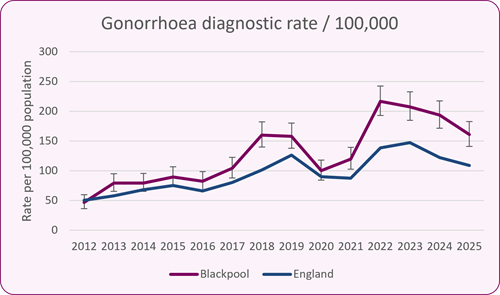 Source: OHID - Fingertips Sexual Health Profile
Syphilis
Syphilis diagnoses have increased markedly in recent years both nationally and locally. In England 9,535 new infectious syphilis diagnoses were recorded in 2024 equivalent to a rate of 16.3 per 100,000 population, representing a 79.5% increase from 2015. Rates in Blackpool have risen since 2012, with a peak of 47.0 in 2019. The rate declined during 2020-2022 before increasing again to 42.3 per 100,000 in 2025, compared with 14.1 per 100,000 nationally.
The majority of new diagnoses of syphilis continue to be among GBMSM (66% in 2024), although cases in heterosexual men and women are also increasing, and across England between 2015 and 2024, increases in men who have sex with women more than doubled and diagnoses in women who have sex with men tripled in number. There is also increased risk for some populations including people experiencing homelessness, sex workers, and people in contact with the justice system), with regards to prevention, testing and treatment, and this is a focus of the new syphilis response plan. Congenital syphilis can cause severe consequences including stillbirth, disability and neonatal death and is passed from mother to baby. There were 13 cases in England in 2023. Strengthening of early detection and treatment in pregnancy is required to eliminate this mode of transmission.16
Other STIs
There has been a marked reduction in genital wart infections since 2014 (nationally and locally), showing the impact from the national HPV vaccination programme for 12 to 13 year olds, and for GBMSM up to the age of 45 years. Blackpool's rate (59.6) is significantly worse than England (39.7) (2025). Rates of vaccination have reduced and have yet to recover to pre-COVID-19 levels.
The rate of new infections of genital herpes has remained relatively steady across England to 2025 (49.0). For Blackpool, the rate has risen 90, which is significantly higher than England’s.
Positivity
STI testing rates and diagnosis rates are closely linked. Positivity measures the percentage of all positive STI diagnoses out of all those who have been tested at a SHS during a new attendance. In 2025, Blackpool's testing positivity was 7.5%, higher than both the North West (6.4%) and England (5.8%), it shows an overall upwards trend. High positivity can indicate that SHS are testing the right people, as well as represent an increased burden of infection, or decrease in the number of tests conducted.
Figure 12: STI testing positivity (of chlamydia aged 25 and over, gonorrhoea, HIV and syphilis), Blackpool, North West and England, 2012 to 2025 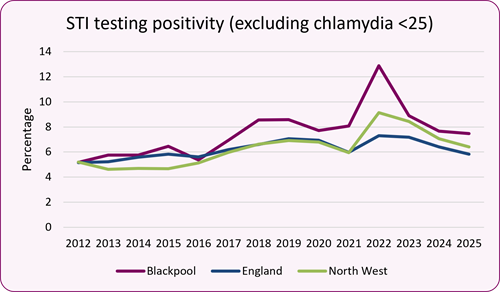 Source: OHID, Fingertips Sexual Health Profile
Re-infection
Multiple STI infections increase the risk of negative health outcomes. Factors that increase the risk of reinfection include a younger age, being a man-who-has-sex-with-men, living in areas of greater deprivation, having a current diagnosis of gonorrhoea and chlamydia, and being of Black or Asian ethnicity.17
Re-infection is measured by the number of individuals diagnosed with a new STI becoming reinfected with another (same or different) STI within 12 months of their previous diagnosis. Most recent data encompasses the COVID-19 pandemic, which must be considered in the interpretation of data.
Between 2019-2023, an estimated 11.9% of women and 10.3% of men in Blackpool became re-infected (England 7.9% for women and 12.8% for men). Blackpool has a significantly higher re-infection rates for women and significantly lower for men, compared to England. Focusing on young people aged 15-19, 16.3% of females and 8.2% of males became reinfected with a new STI within a year. This follows the same pattern as all ages with greater re-infection rates for women and lower rates for men compared to England.
Young people's re-infection rates following treatment are up to 30% for chlamydia and 12% for gonorrhoea (within one year).18 Evidence suggests that high STI rates in this age group are linked not only to patterns of sexual behaviour but also to a lack of knowledge, skills and confidence to negotiate safer sex, communicate effectively with partners and use condoms consistently.19
For further intelligence and insight into HIV and AIDS, please see our dedicated page
Blackpool has a comprehensive sexual health service (SHS) offer - Whitegate Health Centre and Connect Young People's Service (for those aged under-25) are the two main SHS providers in Blackpool. These provide level two services (testing and treatment of uncomplicated STIs in the community, alongside long-acting reversible contraception) as well as treatment of more complex sexual health conditions, care for men who have sex with men, STI treatment in pregnancy, partner notification, and a role in training and governance.*
There are also two general practices offering a level two service. These are Adelaide Street Surgery (Harris Medical Centre) and Stonyhill Medical Centre. The GP-led services aims to complement the SHS and are open to any Blackpool resident whether a registered patient or not.
*For further details around the different levels of service, please see the NHS Data Model and Dictionary page.
Figure 13: location of sexual health services, including primary care service providers (GP practices), 2026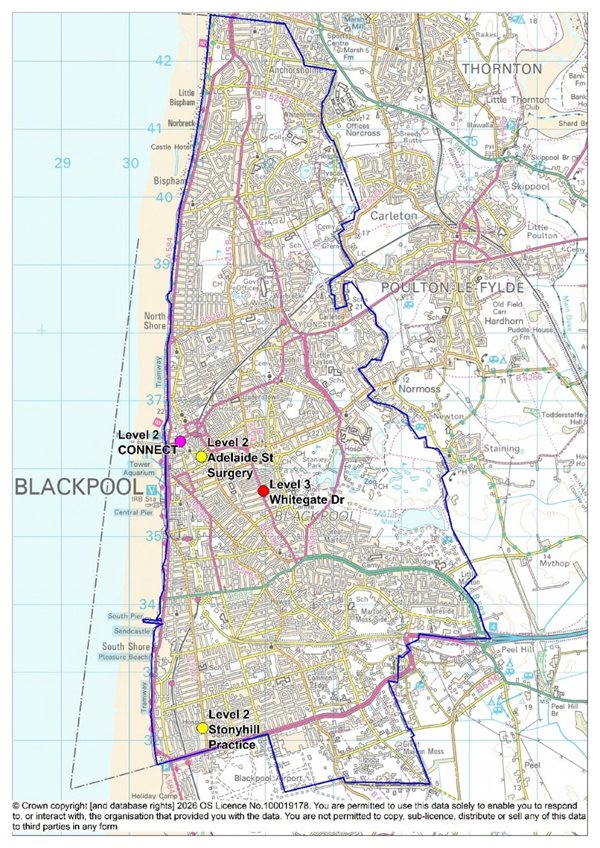 Source: Blackpool and Lancashire Sexual Health Services
The majority of Blackpool residents who utilise sexual health services (SHS), do so within Blackpool. In 2024, only 2% of Blackpool residents attended clinics outside of Blackpool. Of all patients using services within Blackpool, 47% come from outside the local authority and of these 84% were residents in neighbouring authorities of Fylde and Wyre.
Consultations
In 2024, there were 22,855 new consultations at all SHS in Blackpool and of these, 12,827 were for Blackpool residents. The number of patients accessing SHS at Whitegate Health Centre or Connect declined between 2016 and 2022 before increasing to the highest patient total of 9,546 in 2024 (figure 14). The increase for new and total consultations in 2023 is due to the enhanced efforts to maintain SHS contact following the COVID-19 pandemic.
Figure 14: patient consultations for Blackpool residents at Whitegate Health Centre and Connect, 2016 to 2024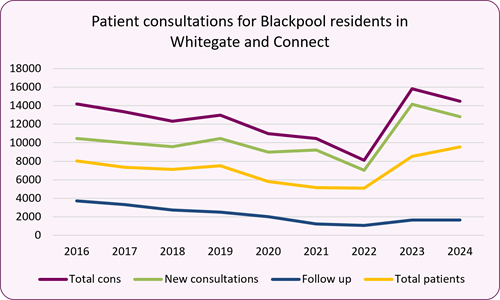 Source: GUMCAD surveillance system, UKHSA
During the COVID-19 pandemic, the SHS offered more telephone consultations and more online testing options. Fewer attendances were face-to-face and the proportion of Blackpool residents being seen at Whitegate Health Centre significantly reduced to only 21% of all patients. Despite this, the post-COVID recovery has seen consultations back to pre-pandemic levels.
Table 1: attendances at Whitegate Health Centre by Blackpool residents, 2016 to 2024
| | Patients from Blackpool | % of total patients seen | New consultations | Follow up consultations | Total consultations |
|---|
| 2016 |
5,632
|
58.9%
|
7,179
|
2,846
|
10,025
|
|---|
| 2017 |
4,399
|
55.5%
|
5,565
|
2,058
|
7,623
|
|---|
| 2018 |
4,393
|
53.5%
|
5,818
|
1,416
|
7,234
|
|---|
| 2019 |
4,890
|
56.4%
|
6,801
|
1,354
|
8,155
|
|---|
| 2020 |
4,584
|
28.0%
|
7,808
|
1,558
|
9,366
|
|---|
| 2021 |
4,718
|
21.0%
|
8,868
|
1,059
|
9,927
|
|---|
| 2022 |
3,741
|
29.8%
|
5,298
|
868
|
6,166
|
|---|
| 2023 |
6,538
|
51.4%
|
10,833
|
1,464
|
12,297
|
|---|
| 2024 |
7,004
|
51.7%
|
9,346
|
1,531
|
10,877
|
|---|
Source: GUMCAD surveillance system, UKHSA
For Blackpool residents attending new consultations, 71% were female, and those aged 20 to 34 made up over half (54.9%) of all female attendances. 47% of all new consultations included an STI test (74% of males, 38% of females), for chlamydia, gonorrhoea, HIV or syphilis. STI tests taken at follow-up appointments are not included in these figures.
Figure 15: number of new consultation and STI tests by age, Blackpool residents, 2024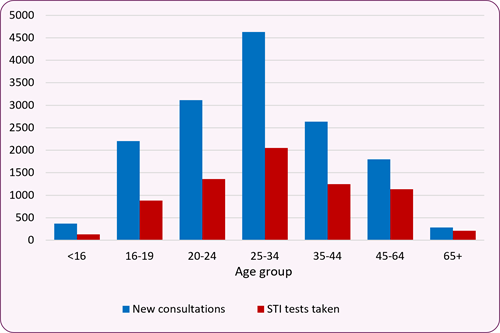 Source: GUMCAD surveillance system, UKHSA
The number of STI tests taken at new consultations in Blackpool increased between 2023 and 2025, with a total of 7,040 tests in 2025, compared to 5,271 in 2023. The proportion of new consultations receiving a STI test increased from 42% in 2023 to 47% in 2025. Males had a higher proportion of STI tests (69%) compared to females (38%) - this is likely due to contraception being a primary need and testing being done at a follow up consultations for females. The greatest numbers of tests were completed for 25-34 year old females (1,215) and in 2025 a similar number were completed for 25-34 and 45-64 year old males (808 and 806 respectively) (figure 16).^
Figure 16: trend in sexual health testing by age and sex, 2023, 2024 and 2025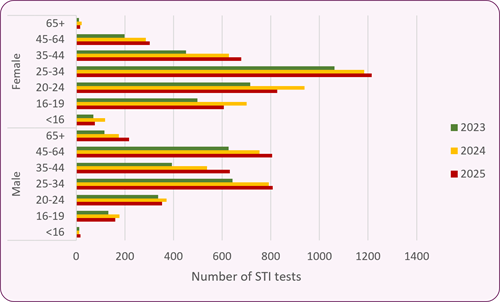 Source: GUMCAD surveillance system, UKHSA. ^excludes HIV tests
Digital services
The data from Blackpool's digital provider shows across 2025, 2,811 STI tests were requested and 1,980 were returned (70.4%). This makes up 28% of total STI tests in Blackpool.
Effective contraception services are key to improving sexual and reproductive health, helping to reduce rates of unintended pregnancy, including teenage conception. This means ensuring universal and equitable access to contraceptive information, services and a full range of contraceptive options, enabling individuals to make informed choices that best meet their needs and preferences.
While the effectiveness of barrier method and oral contraceptive pills depends on correct and consistent use, long-acting reversible contraceptive (LARC) methods provide highly effective protection that is not reliant on daily adherence. Equitable contraceptive access also requires a rights-based approach, recognising that individuals should be supported to choose, decline or discontinue contraception, without pressure, judgement or coercion, and that informed choice and autonomy remain central to high-quality contraceptive care.
The Department of Health's Framework for Sexual Health Improvement in England includes the ambition to reduce unintended pregnancies among all women of fertile age through:
-
increased knowledge and awareness of all methods of contraception among all groups in the local population,
-
increased access to all methods of contraception, including LARC methods and emergency hormonal contraception, for women of all ages and their partners.
In 2024/25, of 976,000 contraception-related contacts within sexual and reproductive health services, approximately 7,600 were by residents from Blackpool.20 The percentage of female residents in Blackpool accessing SHS for contraception is significantly higher than the England average (14%, compared to 5%). Compared to the national average, a greater proportion of those attending contraception services are from younger age groups. In 2024/25, approximately 21% of all women attending SHS services for contraception were under 20 years of age, compared to only 14% nationally.
In Blackpool, of those using contraception, 49% chose to use LARC and 51% chose user dependent methods (England 51% using LARC and 49% user dependent methods).
Figure 17: percentage of the female population using sexual health services for contraception by age group, 2024/25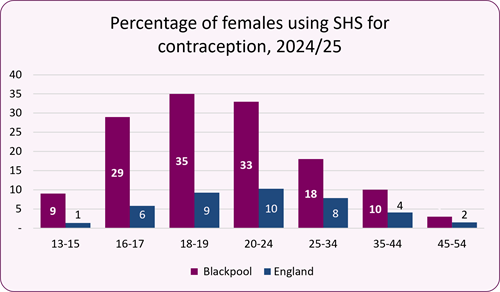 Source: Sexual and Reproductive Health Services (contraception) 2024-25, NHS Digital
Long-acting reversible contraception (LARC)
LARC methods, including contraceptive implants, intrauterine systems (IUS) and intrauterine devices (IUD), are among the most effective forms of reversible contraception. They provide prolonged protection against pregnancy and require minimal user action once fitted, resulting in lower failure rates than user-dependent methods such as the pill or condoms.
Injectable contraception is excluded from the majority of LARC indicators because it:
-
requires regular repeat visits for administration within the year and therefore have a higher failure rate than other LARC methods
-
is easily given in primary care and do not require the specialist resources and training that other LARC methods require
-
falls outside of local authority commissioned SHS contracts as the local authority only commission GP’s to provide IUDs and implants
The rate of total LARC prescribing (excluding injections) among women aged 15 to 44 years in Blackpool is 54.5 per 1,000, significantly higher than England (40.0) and the North West (38.3) (2024). Rates fell sharply during the COVID-10 pandemic due to reduced access to LARC fitting. Provision has subsequently recovered but remains below pre-pandemic levels. Figure 18 shows the trend from 2016.
Figure 18: trend in total prescribed LARC for Blackpool, North West and England, 2016 to 2024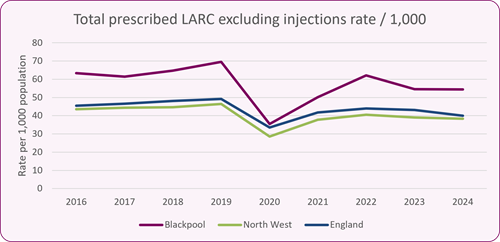 Source: OHID, Fingertips, Sexual Health Profile
The high overall rate of LARC provision in Blackpool is primarily driven by SHS, with the rate of 41.2 per 1,000 (women aged 15 - 44) significantly higher than the North West (18.2) and England (16.3) (2024). This is also the third highest rate nationally, indicating the services play an important role in ensuring access to contraception in Blackpool. In contrast, LARC provision through primary care is lower than regional and national levels. The rate of GP-prescribed LARC in Blackpool was 13.2 per 1,000, compared with 20.2 in North West and 23.7 in England (2024). Prescribing data may underestimate total implants provided by primary care, as some are supplied through a central supply from Whitegate Drive and would not be captured within routine prescribing datasets.
The different methods of contraception prescribed by SHS to Blackpool residents show choices of contraception have remained relatively stable over time, with an almost equal split between user-dependent methods (51%) and LARC methods (49%) (2024/25). Figure 19 shows the trend between 2016/17 and 2024/25.
Figure 19: trend in contraceptive methods, Blackpool 2016/17 to 2024/25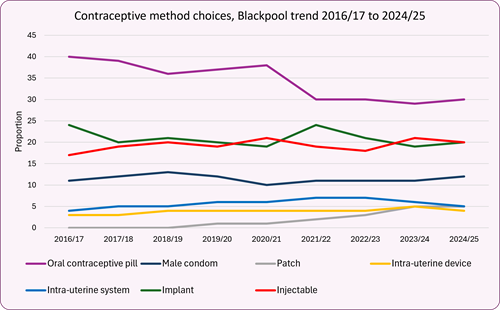 Source: Sexual and Reproductive Health Services (contraception) 2024-25, NHS Digital
Breaking down the usage for 2024/25 shows:
-
-
Oral contraceptive pills (30%), male condoms (12%) and contraceptive patches (5%) were the main user-dependent methods
-
Implants (20%) and injectable contraception (20%) accounted for the largest proportion of LARC prescriptions, followed by intrauterine systems (5%) and intrauterine devices (4%)
-
The uptake of injectable contraception is substantially higher in Blackpool than England (7.3%)
-
The proportion using injectable contraception has remained consistently high over the last decade
The comparatively high reliance on injectable contraception and lower uptake of intrauterine methods may indicate opportunities to improve awareness of, and access to the full range of LARC options available, to allow an informed choice to be made.
The table below shows the trend in LARC (under- and over-25s). For under-25s and over-25s choosing LARC, there has been no significant change in the trends in Blackpool and for both indicators, the authority remains significantly lower than England.
This suggests that women in Blackpool are more likely to use user-dependent methods or contraceptive injections and less likely to access the most effective long-acting contraceptive methods than women nationally. Increasing access to and uptake of LARC methods could contribute to reducing unintended pregnancies and narrowing inequalities in sexual and reproductive health outcomes across the local population.
Table 2: women's choice of contraception at SHS, Blackpool and England, 2016 to 2024
| Under-25s LARC (excl. injection) | 2016 | 2017 | 2018 | 2019 | 2020 | 2021 | 2022 | 2023 | 2024 |
|---|
| Blackpool |
28.7%
|
24.4%
|
23.6%
|
26.3%
|
21.7%
|
28.5%
|
30.9%
|
26.1%
|
26.0%
|
|---|
| England |
21.4%
|
22.6%
|
25.2%
|
27.6%
|
28.8%
|
37.3%
|
36.2%
|
35.0%
|
35.2%
|
|---|
| Over-25s LARC (excl. injection) | 2016 | 2017 | 2018 | 2019 | 2020 | 2021 | 2022 | 2023 | 2024 |
|---|
| Blackpool |
39.2%
|
38.2%
|
37.7%
|
37.2%
|
31.4%
|
42.5%
|
41.6%
|
34.1%
|
34.3%
|
|---|
| England |
37.0%
|
39.5%
|
41.9%
|
43.8%
|
43.5%
|
53.4%
|
53.2%
|
49.6%
|
48.2%
|
|---|
Source: OHID, Fingertips, Sexual Health Profile
The number of LARCs reported is not necessarily an indication of contraceptive compliance, since the contraception may be removed early for a range of reasons and LARC coils can be prescribed for menorrhagia and other gynaelogical reasons, rather than for solely contraceptive purposes.
Blackpool's SHS data show there has been an increase in the number of contraceptive implants fitted from 628 to 751 (19.6%) between 2023/24 and 2024/25. While activity relating to IUS and IUDs fittings remained relatively stable, a reduction in the numbers of IUS removals could be in response to the extension of their licensed use from five to eight years which was announced in 2024.21
Table 3: LARC insertion and removal in SHS (excl. injections)
| | 2023/24 | 2024/25 |
|---|
| Hormonal contraceptive implants fitted |
628 |
751 |
| Hormonal contraceptive implants removed |
600 |
741 |
| IUD fitted |
156 |
141 |
| IUD removed |
92 |
102 |
| IUS fitted |
163 |
168 |
| IUS removed |
152 |
115 |
Source: Pathway Analytics
Emergency hormonal contraception
Emergency contraception can be used following unprotected sex, contraceptive failure, incorrect use of contraceptives, or in cases of rape and sexual assault. It is intended for occasional or emergency use, not as a primary contraceptive method for routine use. Use of EHC is closely linked to a reduced rate of unintended pregnancies for women of all ages. The availability of EHC is essential in reducing teenage conceptions, abortion and repeat abortions, as well as the negative impact of unintended pregnancies including impacts on physical and mental health, and wellbeing of women and their families.
In 2024/25, 600 emergency contraceptives were provided by Blackpool’s SHS, including 40 to those aged under 16-years (13-15 years). This is a rate of 13 per 1,000 women aged 13-54 - the highest rate in England (4 per 1,000) outside of four London authorities.22 For those aged 13 to 15 years, the rate is 14 - the highest in England (1 per 1,000).
These figures do not include emergency contraceptives provided by primary care (GP practices) or pharmacies, and may also reflect the focus on a centralised, accessible SHS, particularly for young people through Connect Young People’s Service. In 2024/25, primary care prescribed emergency hormonal contraception on an estimated 117 occasions, giving a rate of 2.6 per 1,000 females aged 13-54. This is lower than the previous year (242 items or a rate of 5.4 per 1,000) and shows a reduction of 64 percentage points from 2022/23 (321 prescriptions, rate of 7.2 per 1,000).23
From October 2025, the NHS expanded access to free EHC from community pharmacies across England, to allow more convenient access for women to receive EHC.24 Uptake data are not yet available for Blackpool. Young people attending Connect for emergency contraception will receive wrap-around support, ensuring they have access to STI testing and ongoing contraceptive management.
For further intelligence and insight into teenage conceptions, please see our dedicated page.
For further intelligence and insight into abortions, please see our dedicated page.
Attitudes to sexual health
The National Survey of Sexual Attitudes and Lifestyles (Natsal) is the largest sexual health behaviours and attitudes survey of people in the UK. The Natsal-4 study was completed between 2022 and 2024 and publication of results is scheduled for late 2026 - this section will be fully updated when data is available. Due to the size, complexity and cost of these studies, local data is limited and national findings are used to inform local understanding.
The Natsal studies are not regularly undertaken: the most recent available data is from 2010-2012 (Natsal-3) and a COVID edition, for this reason findings from Natsal-3 should not be applied to sexual attitudes and behaviours now. Findings from Natsal-3 demonstrate a change in sexual behaviours from the 1990s, including an increase in the average number of opposite-sex partners and more people reporting same-sex experiences. Additionally, sexual activity continues into later life, reinforcing the need for a life-course approach to sexual health.
Young people
In 2022, Healthwatch Blackpool and Streetlife completed a large survey to understand young people’s views and experiences around SHS in Blackpool. The survey involved 142 young people, and the 40% who had used services had generally positive experiences. The report did highlight gaps concerning awareness and accessibility, with limited knowledge of available support, including emergency contraception, free condoms and postal STI testing. Preferences were identified for longer opening hours for services including evenings and weekends to improve access. The report emphasised the need for increased efforts to raise awareness, particularly through education settings and outreach to improve understanding of SHS and promote early engagement.25
The School Health Education Unit survey of 2,663 students from local schools in Blackpool looked at their experiences around different health and wellbeing related subjects including sexual health and relationships. In the 2024 survey, 43% of pupils in Year 8-10 who participated reported that school was their main source of information about sex, followed by family (21%) and friends (14%). Among older students in further education, reliance on educational lessons was lower (27%), with more reporting the internet (33%) and friends (23%) as key sources.
Sexual relationships were reported by a small proportion of Year 10 pupils (7% currently in a sexual relationship, 12% had a previous sexual relationship) but were more common for older students (24% currently, 15% previously and 9% were in a relationship considering sex). Among Year 12 students, the majority knew how to access contraception and sexual health advice (74% of boys and 86% of girls).
Online activity was common across all ages, with 77-86% of pupils saying they chat online. However, risks relating to being online were clear: with 26-34% receiving online messages that scared or upset them. Around half of younger pupils (49%) and over two-thirds of older students (69%) said they had seen images aimed at adults (including pornographic or violent content) and 30-44% had actively searched for such images. Approximately half of participants (51% girls, 43% boys) said they knew friends who had sent inappropriate images, and 43% of girls reported being asked to send inappropriate images of themselves. Optimistically, most students (90%) reported that they had been taught how to stay safe online, and around three-quarters (76%) felt confident to say no to peer pressure.
Sexual violence remains a significant public health, safeguarding and community safety issue. National evidence shows that sexual assault is both common and substantially under-reported, with women disproportionately affected and many offences perpetrated by current/former partners. The Labour government has committed to halving the prevalence of violence against women and girls in a decade.26
The Crime Survey for England and Wales (CSEW) which includes a confidential self-completion module and is considered the most reliable source for estimating the prevalence of sexual offences. Nationally, the prevalence of sexual assault fluctuated between 1.5% and 3.0% over the past two decades.
For the year ending March 2025 from the Office for National Statistics:
- It is estimated that around 900,000 adults aged 16 years and over experienced sexual assault, including attempted offences, equivalent to 1.9% of the population
- Women were more than four times as likely as men to experience sexual assault in the previous year (3.0% compared with 0.7%)
- Lifetime exposure to sexual violence was also high, with 15.9% of adults reporting sexual assault since the age of 16 and 4.0% reporting rape or attempted rape (7.3% females, 0.5% males)
- More than half (54.7%) of victims of rape or assault by penetration identified a current or former partner as the perpetrator, highlighting the strong association between sexual violence and domestic abuse.
Police-recorded sexual offences have vastly increased over the past decade, however, do not provide a reliable measure of trends in prevalence because they are influenced by changes in recording practices, legislation and reporting behaviour.
-
- Police recorded 209,079 sexual offences in the year ending March 2025, an increase of 11% compared with the previous year
- More than half of this increase was attributable to new offences introduced through the Online Safety Act 2023.
- The prevalence of sexual assault remained stable between 2023/24 (2.6%) and 2024/25 (2.4%).
- Longer term trends show a significant increase in prevalence, rising from 1.7% in 2014/15 to 2.4% in 2024/25 among people aged 16–59 years
Despite increased recording by the police, sexual violence remains largely hidden. Only around one in seven (14.7%) victims of rape or assault by penetration reported their most recent experience to the police, highlighting persistent barriers to disclosure, help-seeking and engagement with the criminal justice system. These findings emphasise the need for continued investment in prevention, early intervention, trauma-informed support services and integrated responses across health, safeguarding, domestic abuse and criminal justice systems.
Locally, Blackpool has the highest recorded rate of sexual offences in the North West, with 7.04 offences per 1,000 population in 2025, more than double the national rate of 3.44. While higher recorded rates may reflect greater reporting and recording as well as underlying prevalence, they indicate a significant demand on policing, safeguarding and support services.
In Blackpool, the closest sexual assault referral centre is at the Royal Preston Hospital, the SAFE Centre has 24 hour support. Independent Sexual Violence Advisers (ISVAs) are available to provide independent support to individuals who are victims of sexual violence and abuse which should be victim-centred, with emotional and practical support. ISVAs are available through Blackpool Teaching Hospitals and by charity Victim Support in the community.
The Crime Survey for England and Wales estimated that 10.6% of people aged 16 years and over (5.1 million people), had experienced domestic abuse, sexual assault and/or stalking in the year ending March 2025. More information around domestic abuse and Blackpool can be found on our JSNA page.
Pregnancy-related healthcare contacts and abortion care provide important opportunities to identify domestic abuse and safeguarding concerns. As part of routine safeguarding practice during these appointments, services typically assess whether individuals are making decisions free from pressure or coercion and may enquire about domestic abuse, safety, and support needs, enabling referral to specialist services where appropriate.
The government's strategy to reduce violence against women and girls (VAWG) identifies the need for sexual violence pathways for reporting, referral and support, with equity of provision. Sexual violence disproportionately affects females and the strategy aims to halve VAWG through a whole society approach to ‘prevention and early intervention’ by addressing root causes of abuse to break intergenerational cycles and challenging sexist and misogynistic attitudes and behaviour, ‘relentless pursuit of perpetrators’ and ‘support for victims and survivors to live free from abuse’.
Aquazure is Blackpool's multi-agency working group that focuses on problem solving for the community safety priorities of rape, sexual assault and sex work, using victim, offender and location methodology. It employs a public health approach, focusing on prevention and early intervention.
LGBTQ+ and sexual abuse
A 2023 report by Galop, the UK’s Lesbian, Gay, Bisexual, Trans and Queer+ (LGBTQ+) anti-abuse charity, found high proportions of sexual harassment (88%) and sexual assault (77%) from over 1,000 survey respondents. LGBTQ+ respondents who had experienced sexual violence in adulthood, the vast majority (79%) were abused by someone known to them, most commonly a current or former partner (30%), an acquaintance (18%) or a friend (15%). The study also found that 76% of survivors reported that the perpetrator of their most significant experience of sexual violence was a man, while over half (54%) identified the perpetrator as heterosexual. Transgender women appeared to be at particular risk of stranger-perpetrated sexual violence, reporting almost double the rate seen among LGBTQ+ respondents overall.
The report highlights that assumptions about victims and perpetrators can make LGBTQ+ survivors less visible within services and policy responses, potentially creating additional barriers to disclosure, support and justice. These findings emphasise the need for inclusive, trauma-informed sexual violence services and prevention strategies that recognise the specific experiences and needs of LGBTQ+ communities.27
Child sexual abuse and exploitation remain significant issues in England, although recorded data is likely an under-representation. In 2025, there were 29,560 children assessed as having experienced child sexual abuse and 12,120 assessed as experiencing child sexual exploitation.28 The most common co-occurring factors are mental health concerns about the parent, mental health concerns about the child, emotional abuse and domestic abuse.
Nationally there is considerable variation between local authorities in the identification and recording of CSA/CSE, which may contribute to differences in reported rates. Police recorded 101,199 child sexual abuse offences in England and Wales during 2023/24, resulting in 13,098 charges - the highest number on record. The Centre of Expertise on Child Sexual Abuse estimates 500,000 children experience sexual abuse each year in England and Wales (figure 20), highlighting the substantial gap between estimated prevalence of abuse and cases known to statutory services and the criminal justice system.29
Figure 20: estimated child abuse cases per year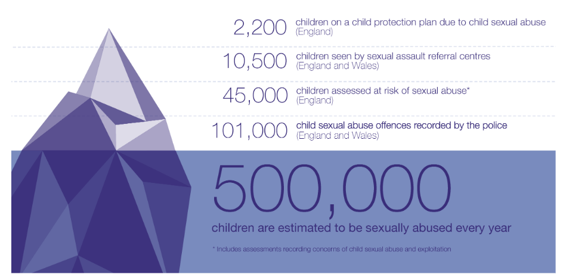
Source: Centre of Expertise on Child Sexual Abuse – Child Sexual Abuse in 2023/24: Trends in official data
CSE remains a serious issue in Blackpool and across Lancashire. For further information about CSE in Blackpool, visit the Blackpool JSNA CSE webpage or the Awaken Exploitation team. Service providers play a key role in identify these issues and make appropriate referrals as necessary, including to the police, social services and specialist health services.
Chemsex describes sexual activity while under the influence of drugs, mostly between men. Three specific drugs are usually involved: methamphetamine (crystal meth), mephedrone and GHB/GBL. However use of other drugs including ketamine, cocaine and MDMA can also be associated with chemsex. Prevalence of chemsex is difficult to capture; research from different studies has found that UK prevalence estimates varied from 17% of GBMSM attending sexual health clinics to 31% in HIV positive inpatients.30
The risks of chemsex include:
- unsafe sex (without a condom) or rough sex
- issues with consent or having sex with more people than planned
- increased duration of sex sessions, potentially increasing the risk of STIs being passed on
- a dependence on chemsex drugs
- infections from injecting, including HIV, hepatitis C and B
A survey across pan-Lancashire found that sexualised substance use was more common than chemsex parties and the most frequently reported substances included: amyl-nitrates (poppers), sildenafil (Viagra), cocaine and GHB/GBL.31 Renaissance UK - a harm reduction charity - offers support around sexualised substance use in Blackpool.
Pre-exposure prophylaxis
PrEP is a type of medication taken before sex to reduce the risk of getting HIV. PrEP is available free on the NHS in England from sexual health clinics and can reduce the risk of HIV by 99% when taken correctly.
HPV vaccine for MSM and transgender people
HPV is a common STI that can be caught through any kind of sexual contact with another person who already has the virus. In addition to the vaccine for 12-13 year old children, since 2018 the HPV vaccination has been available through the NHS via sexual health clinics for men who have sex with men aged 45 years or under. Transgender people who have the same risk as men who have sex with men, sex workers and people with HIV are also eligible for the vaccine.
Our children (children in need)
Children in care are some of the most vulnerable children in society, due to both the experiences and situations that lead to them being placed in care and certain factors associated with being in care.32 Blackpool has the highest rate of children in its care (which we call 'Our Children') in England.33
At the end of March 2023:
- Blackpool Council was the corporate parent for 539 children and young people.
- This is a rate of 191 per 10,000 children, compared to the national average of 71 per 100,000.
Across England, child sexual exploitation was identified in 16% of all children in care assessments in 2017/18.34 Evidence shows that children in care often have a higher rate of poor sexual health and may be more vulnerable to risky sexual activity, exploitive and abusive relationships and early parenthood.35 Our Children in Blackpool may have been placed from other areas across the North West and beyond, therefore may be less likely to have knowledge of local services including SHS.
Sex workers
Blackpool has a number of sex workers operating at venues such as massage parlours and saunas as well as street-based sex work. Marginalised groups are often represented disproportionately in the sex industry due to reduced access to economic opportunities, structural inequalities such as discrimination and vulnerabilities linked to migration. Research has found that sex workers have higher rates of drug use and smoking prevalence, as well as higher risks of mental health problems, STIs, hospital admissions and death than the general population. The same study found that sex workers can experience significant health challenges which can be linked to stigma, violence, exploitation and structural barriers within healthcare systems.36
The Sex Workers Outreach and Support Service (SWOSS) project is funded by Blackpool Council and provided by Renaissance UK harm reduction charity as part of Horizon. The service supports all those over the age of 18 involved in sex work in Blackpool. This includes the provisions of free condoms, help with accessing sexual health and other health services, through in-reach, outreach, peer support and sharing resources. Additionally, the service promotes the Ugly Mugs scheme, a UK charity which works with sex workers to keep each other safe through sharing information, collaborating on research and design and delivery of safety tools.
Lesbian, gay, bisexual and transgender
Blackpool has a large, well-established and visible lesbian, gay, bisexual, transgender and queer + (LGBTQ+) community, with the + representing all other sexual orientations and gender identities.37
The 2021 Census asked voluntary questions about sexual orientation and gender identity, which provides the most robust local data. In Blackpool 93.3% answered the question on sexual orientation with the majority identifying as heterosexual (88.4%). 4.9% (5,692) of people aged 16 years and over identified as LGBT+, higher than the England average of 3.2%, however the true size of the LGBT+ population is likely to be higher as a percentage of people did not answer the question.38 Census data also show that a small proportion of the population reported a gender identity different from their sex registered at birth, highlighting the diversity of Blackpool’s population. Blackpool has a large number of LGBTQ+ businesses such as entertainment venues, hotels and guesthouses, all of which attract visitors from outside of the area. As with the wider population, the LGBTQ+ community in Blackpool may also be affected by factors such as transience and migration, which can influence access to services and continuity of care.
The LGBTQ+ population experience a number of health inequalities affecting access, experience and overall health outcomes, including sexual health. There is ongoing national work to better understand and address these inequalities through the 2025–2026 LGBTQ+ Health Evidence Review.39
The Stonewall ‘LGBT in Britain – Health’ report found that over half of LGBT people had experienced depression and 13% had attempted suicide in the previous year and 14% had avoided healthcare due to fear of discrimination.40 Many individuals are reluctant to disclose their sexual orientation or gender identity to healthcare professionals, reducing opportunities for appropriate advice, screening and early intervention. The health needs of the LGBTQ+ population vary significantly and are further shaped by age, ethnicity, deprivation and other intersecting factors. These needs may wrongly be assumed to be the same as the heterosexual population.
A study using ‘Reducing Inequalities in Sexual Health’ community survey data from 2024 identified that only a quarter of GBMSM with greater risk of STIs were testing as frequently as recommended. The factors associated with frequent STI testing among GBMSM included use of HIV-PrEP, recent STI diagnosis and younger age. Heterosexual and bisexual orientation was also associated with less frequent testing than for gay men who have sex with men.41
Having SHS that are inclusive, accessible and welcoming may help reduce inequalities experienced by LGBTQ+ communities. Regular training for staff has been shown to improve understanding of specific health needs, experiences and barriers to access and enables services to provide appropriate care and actively challenge discrimination where it occurs. High performing services work proactively with local LGBTQ+ organisations and youth groups to raise awareness and strengthen community engagement.
Routine collection of sexual orientation and gender identity data by SHS is important for assessing service accessibility and identifying potential inequalities in access, uptake and outcomes. Consistent monitoring allows services to better understand the needs of LGBTQ+ populations, evaluate whether services are reaching all groups equitably and inform targeted service improvement where any disparities are found.42
Prison population
Although Blackpool does not have a prison, HMP Kirkham (a category D 'open' prison) is located nearby. Prisoners on day release may spend time in Blackpool, increasing demand on local services and placing pressure on prison and community healthcare provision to manage STIs. Men involved in the criminal justice system experience disproportionately poorer sexual health outcomes, including higher rates of STIs, HIV, and viral hepatitis, alongside wider vulnerabilities linked to social exclusion.43
People with learning disabilities
Adults with learning disabilities have the same rights to sexual relationships as the wider population yet often experience significant barriers to accessing sexual health information and services.44 Managing experiences of puberty, sexual identity and sexual feelings can be more complex for people with learning disabilities particularly where accessible education and tailored support are limited. Historically, the sexual health needs of people with learning disabilities have been overlooked, with sexuality only addressed if concerns arise, contributing to stigma and unmet need. As a result, people with learning disabilities may be at increased risk of negative sexual experiences, STIs and unplanned pregnancies.
Some individuals may lack capacity to consent, increasing vulnerability to exploitation and abuse, and requiring robust safeguarding approaches. Other factors, including sexual orientation and gender identity, may further compound inequalities for people with learning disabilities.
In Blackpool, a community outreach service supports individuals who cannot attend mainstream SHS due to factors such as poor engagement with services, learning disabilities, substance misuse, domestic violence, being a young person with a vulnerability, poverty affecting transport, and sexual risk-taking behaviour. This flexible, targeted approach aims to improve access to contraception, STI testing, advice and onward referrals.45 Easy read leaflets with sexual health information have been produced and these are available online.
As previously noted, Blackpool's main clinical SHS are delivered from Whitegate Health Centre and Connect Young People's Service. Two GP practices are also commissioned to provide tier 2 SHS for Blackpool residents.* STI tests can also be ordered online and this digital service is offered by Preventx.
*NHS Data Model and Dictionary gives further details of the services provided.
Renaissance is a charity which delivers harm reduction, non-clinical sexual health and HIV support and rapid testing across Blackpool. They provide confidential advice, information and practical support including peer support, counselling and education, alongside community‑based sexual health outreach. Services are targeted towards populations at higher risk of poor sexual health, including people living with or affected by HIV, LGBTQ+ communities, individuals involved in sex work and people who use drugs, to improve access and reduce inequalities among these groups in Blackpool.
Blackpool has expanded sexual health provision by improving clinical access, community outreach, youth support, LGBTQ+ inclusion, education, and targeted interventions for people facing multiple disadvantages. The overall aim is to reduce unintended conceptions, improve STI detection, and increase access for high‑risk groups.
- Enhanced GP LARC provision — several GP practices now offer LARC to both registered and non‑registered patients. LARC reduces unintended pregnancies because it is more reliable than user‑dependent methods
- Trauma‑informed access for people facing multiple disadvantage — flexible engagement approaches help individuals who may avoid traditional services
- Domiciliary outreach service — home visits for vulnerable people who are not engaging with clinics, providing wrap‑around sexual health support
- Trans-inclusive clinic — a monthly specialist clinic designed to meet the needs of transgender/gender diverse people
Community‑based and targeted outreach
- Condom distribution scheme — free condoms and lubricant, with targeted outreach to GBMSM in public sex environments and nightlife venues
- Support for sex workers — tailored engagement to help sex workers access testing, contraception, and wider support
- Horizon harm reduction service — sexual health support delivered in non‑clinical settings, including outreach to saunas
Young people’s services
- ADASH (Blackpool’s Adolescent Service) — multi‑agency support for 10–24‑year‑olds, covering sexual health, substance misuse, harm reduction, and STI testing.
- Education and prevention in youth settings — work with schools, colleges, and youth organisations to promote healthy relationships and sexual wellbeing
- Personal, social, health and economic (PSHE) support officer — helps schools develop high‑quality relationship and sex education/PSHE provision, offering training, networks, and quality‑assured teaching resources encompassing education and prevention for sexual health
Testing and early diagnosis
- Expanded HIV testing — opt‑out testing in A&E and GP practices, community point‑of‑care testing, and home self‑sampling kits increase early detection and reduce transmission
These investments create a whole‑system approach that:
- increases access points (GPs, outreach, home visits, youth services, community venues)
- reduces barriers for high‑risk or marginalised groups
- strengthens prevention through education and condom distribution
- improves early detection of STIs and HIV
- supports autonomy and choice through reliable contraception options
- A Framework for Sexual Health Improvement in England (2013) sets out the government's ambitions for good sexual health and provides evidence, interventions and actions to improve sexual health outcomes. A commitment from the government for a new sexual and reproductive health framework for England has been made.46
- Blackpool Sexual Health Strategy 2023-2026 provides a strategic framework to shape the planning and delivery of local services and interventions to deliver its vision to improve sexual health outcomes across Blackpool.
- Sexual health, reproductive health and HIV in England: a guide to local and national data (July 2024) – this resource from UKHSA provides a guide to data related to sexual and reproductive health across England to be used to inform commissioning, policy development and management of SHS and interventions.
- STI Prioritisation Framework, 2024, sets out a framework to guide prioritisation for commissioners on addressing inequalities in sexual health outcomes and preventing adverse outcomes.
- Sexual and reproductive health and HIV: strategic action plan, 2016-2019 this is the most recent comprehensive strategy from the government regarding its approach to improving the public’s sexual health and reproductive health. However, as this was written over a decade ago, data will no longer be accurate, separate policy now exists for different STIs.
- Sexual and reproductive health and HIV: applying All Our Health aims to provide evidence, information and tools to support those implementing sexual health promotion and improvement to lead to better sexual health outcomes.
- The UK Health Security Agency Syphilis Response Plan outlines the response to the recent rise in syphilis cases across England including limiting adverse health outcomes, reducing transmission and targeting inequalities associated with the disease.
- Blackpool Community Safety Plan, 2026-2029 identifies violence against women and girls, domestic abuse and exploitation as priority areas.
- HIV Action Plan for England, 2025 to 2030 sets out England’s commitment to end new HIV transmission. It has been developed by the Department of Health and Social Care (DHSC), in partnership with UKHSA and NHS England and has five strategic priorities to achieve clear goals and will measure progress through focus on five populations disproportionately affected by HIV. It will be delivered through local and regional HIV Action Plans and by services commissioned by local authorities and integrated care boards.
- The Renewed Women’s Health Strategy for England, alongside the 10 Year Health Plan, this strategy aims to improve the most important health outcomes for women. This encompasses easier access, safe and high-quality contraception, abortion care, fertility services, preconception care and support after pregnancy loss. As well as focusing on reducing health inequalities for women.
- Relationships, Health and Sex Education Guidance 2025, this sets out what schools must do in providing relationships and sex education, as well as what they should do in terms of evidence and good practice.
- Fit for the Future: 10 Year Health Plan for England, long term plan which focuses on 3 shifts: from hospital to community, from analogue to digital and from sickness to prevention.
- Freedom from violence and abuse: a cross-government strategy to build a safer society for women and girls, this strategy aims to halve violence against women and girls in a decade.
- Men’s health: a strategic vision for England, 2025, in the health challenges chapter of this strategy, the inequalities of transmission for some STIs for GBMSM are outlined and 10 year NHS plan, HIV Action plan, 4CMenB vaccine and DoxyPEP are identified as interventions to improve outcomes.
- Teenage Pregnancy Prevention Framework, 2018, sets out a national framework to support young people to prevent unplanned pregnancy and develop healthy relationships.
World Health Organisation (2026) Sexual and Reproductive Health and Research (SRH)
UK Health Security Agency (UKHSA) (2025) Commissioning local HIV sexual and reproductive health services
UKHSA (2024) STI Prioritisation Framework
British Association for Sexual Health and HIV (BASHH) (2023) bashh_summary_guidance_on_stis_testing_2023.pdf
UHKSA (2025) GRASP protocol
UKHSA (2025) A guide to the Meningococcal B vaccine for protection against Gonorrhoea - GOV.UK
Terrence Higgins Trust (2025) DoxyPEP | Terrence Higgins Trust, British Association for Sexual Health and HIV (BASHH) UK national guideline for the use of doxycycline post-exposure prophylaxis (DoxyPEP) for the prevention of syphilis, 2025
UKHSA (2026) Sexually transmitted infections quarterly report, England, June 2026
UKHSA (2025) Mpox: guidance
UKHSA (2023) Warning after rise in extremely drug-resistant shigella - GOV.UK
Office for Health Improvement and Disparities (2026) Fingertips | Department of Health and Social Care
OHID (2026) SPLASH profile, Sexual and Reproductive Health Profiles | Fingertips | Department of Health and Social Care
HIV and STI portal, GUMCAD report
Chlamydia - uncomplicated genital | Health topics A to Z | CKS | NICE
Changes to the National Chlamydia Screening Programme (NCSP) - GOV.UK
UKHSA (2026) UKHSA Syphilis Response Plan
Landray (2025) Factors associated with sexually transmitted reinfections, number of sexual partners and condom use among previously infected young people - PMC
Safetxt: a safer sex intervention delivered by mobile phone messaging on sexually transmitted infections (STI) among young people in the UK - protocol for a randomised controlled trial | BMJ Open
A qualitative study exploring experiences of the safetxt digital health intervention to reduce sexually transmitted infections in young people in the UK | BMJ Open
NHS England Digital (2025) Sexual and Reproductive Health Services, England (Contraception), 2024-25
The College of Sexual & Reproductive Healthcare (2024) FSRH CEU Statement: Mirena 8 years contraception | CoSRH
NHS England Digital (2025) Sexual and Reproductive Health Services, England (Contraception), 2024-25
Data from Open Prescribing
Free ‘morning after pill’ for women at high street pharmacies
Healthwatch Blackpool (2022) Young people and sexual health report
Home Office (2026) Freedom from violence and abuse: a cross-government strategy to build a safer society for women and girls
Galop (2023) Sexual violence: A snapshot of those harming LGBT+ people
Department for Education (2025) Children in need: A focus on sexual abuse and exploitation
Centre of expertise on child sexual abuse (2025) Child sexual abuse in 2023/24: Trends in official data
UKHSA (2018) Sexualised drug use in the United Kingdom (UK): A review of the literature - UK Health Security Agency
Renaissance and University of Central Lancashire (no date) Chemsex Insight Report
Centre of expertise on child sexual abuse (2019) Looked-after children and child sexual abuse | CSA Centre
Blackpool Council (2026) Our Children Blackpool JSNA
Independent Inquiry Child Sexual Abuse (2020) D.2: Children in care | IICSA Independent Inquiry into Child Sexual Abuse
School Health & Wellbeing Research Brief (2019) Sexual health outcomes for young people in state care: Cross-sectional analysis of a national survey and views of social care professionals in Wales
Tiwana et al. (2026) The Health Needs of Sex Workers and the Factors that Enable or Hinder Their Access to Services: A Co‐Produced, Multimethod Study in the United Kingdom
Stonewall (no date) LGBTQ+Terms: Inclusive Glossary and Definitions | Stonewall UK
Blackpool Council (2024) Sexual Orientation JSNA
Mickleover Medical Centre (2025) NHS launches first ever review to tackle LGBT+ health inequalities
Stonewall (2018) LGBT in Britain Health
Findlater et al. (2024) Characteristics associated with frequent sexually transmitted infection (STI) testing in a community-based sample of gay, bisexual, and other men who have sex with men (GBMSM), United Kingdom, 2024 | PLOS Global Public Health
NHS England Digital () Sexual orientation - NHS England Digital
Templeton, Kelly and Lohan (2019) Developing a Sexual Health Promotion Intervention With Young Men in Prisons: A Rights-Based Participatory Approach - PMC
Mencap (no date) Learning Disability Sex and Relationships Research | Mencap
Blackpool Teaching Hospitals (no date) Clinical Outreach Referral Service │ Blackpool and Lancashire Sexual Health Services
BASHH (2026) BASHH welcomes the Government’s commitment to a sexual and reproductive health framework for England