Alcohol
Last Modified 14/05/2026 15:47:13
Share this page
Further information relating to young people can be found in the Alcohol use in children and young people section.
An estimated 22%1 of adults in England regularly drink in excess of the Chief Medical Officers’ guidelines with 608,416 adults estimated to be alcohol dependent in England2. Alcohol is a leading risk factor for death and disability in England has been identified as a causal factor in more than 200 diseases3 including cirrhosis of the liver, heart disease, depression, pancreatitis and stroke as well as a number of cancers. Alcohol can be a long-term condition and dependent individuals may experience many health problems and are frequent users of health services. Excessive alcohol consumption is a major cause of preventable premature death.
Alcohol misuse impacts not just on the drinker but also those around them. Children affected by parental alcohol misuse are more likely to have physical, psychological and behavioural problems. Parental alcohol misuse is strongly correlated with family conflict and with domestic violence (DV) and abuse. This poses a risk to children of immediate significant harm and of longer-term negative consequences4.
The consequences of alcohol misuse are worse in the North West and North East of England than other regions of England, and Blackpool has high levels of alcohol-related harm (health, disorder, violence) for the size of the population.
Blackpool has a thriving and vibrant visitor and night-time economy (NTE). It is an important part of the character of the town and in 2023 the town attracted over 21.5 million visits. The economic and employment impact of this is considerable, delivering nearly £2 billion in economic impact and supporting the equivalent of over 40% of full-time employment5.
Whilst the town does attract a significant number of family visits, and the updated conference facilities make it an attractive option for large events, a proportion of the visitor economy is based around entertainment premises licensed to sell alcohol.
While there are economic benefits for the town from tourism, the role that licensed premises plays within the visitor economy and the type of visit this attracts can cause negative impacts both for visitors and residents. The increased number of people in the town centre alongside warmer weather and the opportunity for all day drinking does lead to an increased risk of alcohol related crime. Blackpool has the highest number of licensed premises per kilometre of any local authority area in England outside of London6. In total there are 1,178 licensed premises, which are highly concentrated in three wards in and around the town centre, which also experience higher levels of deprivation.
A busy NTE has its associated problems. The effects of alcohol and drugs and the concentration of people are two factors, among others, which can spark aggression and high demand for emergency services. Alcohol is a common factor in crime, with 3,097 alcohol-related crimes in Blackpool (April-24 to Mar-25) of which 2,180 involved violence. The number of alcohol related crimes in Blackpool has remained fairly consistent since 2022. 58% of alcohol related violent crime occurred in three wards, Claremont, Talbot and Bloomfield7.
Effective strategies to reduce alcohol-related harm from a public health perspective can include, interventions which increase price, restrictions on the physical availability of alcohol, restrictions on alcohol advertising, licensing policy, brief-interventions with at-risk drinkers, and treatment of drinkers with alcohol dependence8.
Despite the impact on the hospitality sector from a range of COVID-19 interventions, including local and national lockdowns and reductions in capacity and restriction on large events, there is limited evidence of any reduction in the amount of alcohol consumed in England during 2020 and 2021. Data from the Office for Health Improvement and Disparities (OHID)9 suggests the total amount of alcohol consumed in England during 2020 and 2021 was broadly similar to the pre-pandemic period, whilst other studies suggest that there was in fact an increase in alcohol consumption across all ages, primarily at home. There is evidence that this was at least partially a coping mechanism to the stress caused by the pandemic and the uncertain situation in 2020/2110. This suggests that people were drinking more at home. In addition, there is evidence that the prevalence of increased and high-risk drinking increased in 2020 and remained elevated at the end of 2021 and that people who drank more before the pandemic are more likely to have increased their drinking during 2020 and 202111.
There is evidence of a reduction in alcohol consumption by young adults during the COVID-19 period12. This could be related to longer-term trends in alcohol consumption patterns in young people or because younger people were more likely to drink at the venues which were closed. In addition, there is evidence that this change in where alcohol is consumed has persisted post pandemic13. This trend may also be influenced by the cost-of-living crisis which could have made drinking outside of the home too expensive for some households. Even if people are spending less overall on alcohol it is still possible to drink more at home at a lower cost and therefore this can increase consumption.
Since 2020 there has been an increase in the number of hospital admissions due to alcohol and in alcohol related mortality. The reasons for this are likely to be multi-factorial, and harm from alcohol can lag consumption considerably, but a recent modelling by the Institute of Alcohol Studies and Health suggests that changes in drinking patterns related to COVID-19 could cause around 150,000 extra cases of alcohol related diseases in England by 203514.
Patterns of consumption
Alcohol-related harm is largely determined by the volume of alcohol consumed and the frequency of drinking occasions. As such, the risk of harm is directly related to levels and patterns of consumption. However, there can be a considerable lag between alcohol consumption and alcohol-related harm, particularly for chronic conditions where the lag can be many years. In England around 23% of adults regularly drink in excess of the Chief Medical Officers’ guidelines15, with similar levels in Blackpool (see figure 1). Harm can be short-term and instantaneous, due to intoxication or long-term, from continuous exposure to the toxic effect of alcohol or from developing dependence.
To keep health risks from alcohol to a low level it is safest not to drink more than 14 units a week on a regular basis. The Chief Medical Officers' guidelines for both men and women are:
-
- To keep health risks from alcohol to a low level it is safest not to drink more than 14 units a week on a regular basis
- If you regularly drink as much as 14 units per week, it is best to spread your drinking evenly over three or more days
- If you have one or two heavy drinking episodes a week, you increase your risks of death from long-term illness and from accidents and injuries
- The risk of developing a range of health problems (including cancers of the mouth, throat and breast) increases the more you drink on a regular basis
- If you wish to cut down the amount you drink, a good way to help achieve this is to have several drink-free days each week.
In addition, the Chief Medical Officer states that:
-
- An alcohol-free childhood is the healthiest and safest option
- The safest approach for women who are pregnant or planning for pregnancy is to not drink at all.
The Health Survey for England (HSE) provides an estimate of alcohol consumption nationally. In 2022 nearly 10.9 million adults drank at levels of increasing (8.7 million) and higher risk (2.2 million). Increasing risk is defined as drinking 14-50 units per week for men and 14-35 units a week for women. Higher risk is defined as more than 50 units for men or 35 units for women16.
The more units regularly consumed per day increases the risk factor, whilst binge drinkers could drink at any level normally with an occasional binge. Dependent drinkers are predominantly a subset of either increasing risk or higher risk drinkers, however recovering drinkers could be abstinent but remain dependent.
Figure 1: Patterns of alcohol consumption for Blackpool and England (%)
| | Blackpool | England |
|---|
| Adults who abstain from drinking |
17.3% |
16.2% |
| Adults drinking less than 14 units per week |
60.0% |
61.0% |
| Adults drinking more than 14 units per week |
22.7% |
22.8% |
| Source: OHID, National Drug Treatment Monitoring System, Alcohol commissioning support pack, 2023-24 |
Estimated data from the HSE 2015-18 (the 2022 HSE, does not include local estimates) suggests that the consumption of alcohol in Blackpool is similar to the England average, (figure 1). However, in the UK, less affluent people experience a higher rate of alcohol-related health problems, despite deprived areas having a greater proportion of people who do not drink and lower prevalence of people regularly drinking in excess of 14 units. This is known as the ‘alcohol harm paradox’17.
Price and by extension affordability impact upon the demand and consumption of alcohol18. On average people living in more deprived areas, who have lower incomes, buy less alcohol than those living in more affluent areas. However, a higher proportion of the population in more deprived areas drink at an increased or higher risk level and are therefore more likely to suffer significant health impacts as a result of their alcohol consumption19.
Drinking combined with other risk factors, such as smoking or having a poor diet, has been found to multiply the risk of developing conditions like alcoholic liver disease and some cancers, compared to doing them separately or not at all. Less affluent drinkers are more likely to have multiple risk factors, compared to their more affluent counterparts. This multiplied risk is likely a contributory factor in the difference in harms between socio-economic groups.
Data from the Adult Psychiatric Morbidity Survey for England estimated that in 2014/15 the proportion of Blackpool’s population who were dependent drinkers was around 3.85%, whilst England as a whole was 1.39%20. More recent estimates of alcohol dependency via NTDMS are broadly consistent, with the latest data from 2019/20 showing 3.9% dependent drinkers21.
Licensed Premises (as at July 2025)
Blackpool has by the most licensed premises of any lower tier local authority in Lancashire. In addition, when comparing nationally, Blackpool has the highest number of premises licensed to sell alcohol per square kilometre outside of London, with a rate of 33.8 per square kilometre. For England as a whole, it is 1.3 licensed premises per square kilometre6.
When looking at the type and distribution of licensed venues. 41% of Blackpool's licenses are held by hotels which is reflective of the town’s tourist industry, as is the 139 (13% of the Blackpool total) licenses held by pubs, clubs and bars. Additionally, there are 167 (15%) off-licences/supermarkets which are able to sell alcohol. Licensed premises in Blackpool are concentrated in a small number of wards. Around 61% of Blackpool's licensed premises are located within Bloomfield, Claremont and Talbot. Outside of the three town centre wards, the numbers of licensed premises ranges from 106 in Waterloo to 6 in Highfield22.
The number, type and density of premises selling alcohol in a particular area can lead to serious problems of nuisance or disorder. In these circumstances the impact of the premises taken as a whole can be greater than that arising from individual premises. In order to address these harms, local areas can choose to introduce Cumulative Impact Policies to control the number of premises within a defined area. Blackpool previously had Cumulative Impact Policy in place for off- and on-site premises but these have now expired. A decision on the future of the Cumulative Impact Policy in Blackpool, as well as defining the area it would cover, is under review (as of July 2025).
Alcohol is a major cause of ill health; it causes and contributes to a wide range of serious health problems, accidents and deaths. The health effects of alcohol can be acute, for example poisoning or injury; and chronic (long term), for example liver cirrhosis, cardiovascular disease or female breast cancer. An analysis of 67 risk factors and risk factor clusters for death and disability found that alcohol is one of the leading risk factors for death and disability after smoking and obesity23. In most cases, the relationship between alcohol and disease is 'dose-dependent' - the more alcohol consumed, the greater the risk of disease.
Mortality and hospital admissions due to alcohol
Alcohol consumption is a contributing factor to hospital admissions and deaths from a diverse range of conditions and there are a number of definitions used to describe alcohol mortality and admissions.
Definitions
-
- The term 'Alcohol-specific conditions' refers to conditions caused wholly by the use of alcohol including alcoholic liver disease (such as fatty liver, hepatitis, and cirrhosis), alcohol poisoning, and mental and behavioural disorders due to alcohol use. These are health conditions caused entirely or exclusively by alcohol consumption, distinguishing them from alcohol-related conditions, which are those where alcohol is a contributing but not the sole cause.
- Alcohol-related conditions include alcohol-specific ones but also encompass those where alcohol is a contributing factor, such as various cancers or heart disease, which can occur without alcohol but are made more likely by it.
- Alcohol-related mortality refers to deaths where alcohol is a direct cause or a contributing factor. This includes alcohol-specific deaths, which are conditions caused directly by alcohol consumption, such as alcoholic liver disease, and alcohol-attributable deaths, a broader category that also includes conditions where alcohol increases the likelihood of death, like certain cancers or heart disease.
- Broad definition: A measure of hospital admissions where either the primary diagnosis (main reason for admission) or one of the secondary (contributory) diagnoses is an alcohol-related condition. This represents a broad measure of alcohol-related admissions but is sensitive to changes in coding practice over time.
- Narrow definition: A measure of hospital admissions where the primary diagnosis (main reason for admission) is an alcohol-related condition. This represents a narrower measure. Since every hospital admission must have a primary diagnosis it is less sensitive to coding practices but may also understate the part alcohol plays in the admission.
- In general, the broad measure gives an indication of the full impact of alcohol on hospital admissions and the burden placed on the NHS. The narrow measure estimates the number of hospital admissions which are primarily due to alcohol consumption and provides the best indication of trends in alcohol-related hospital admissions.
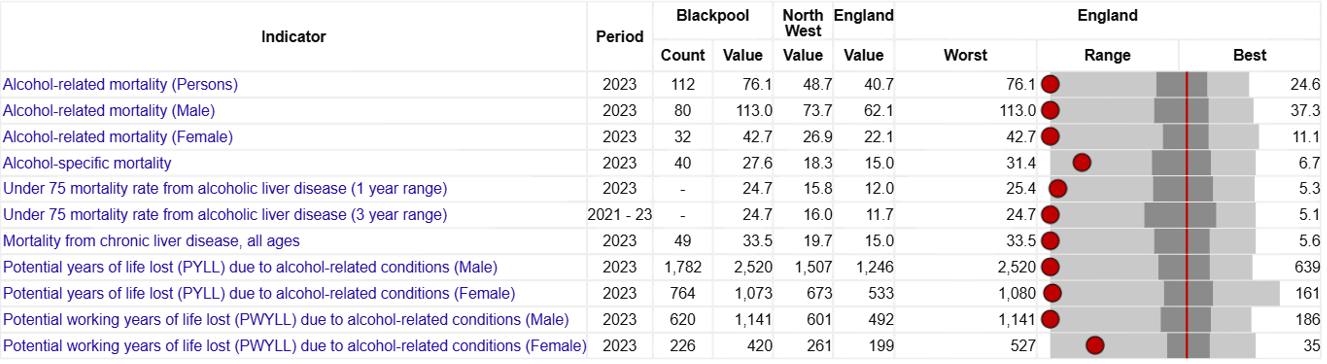
Figure 2 shows that Blackpool is significantly worse than the England average on all alcohol mortality indicators and is the worst in the country for some measures. This includes overall alcohol related mortality for both male and female categories24.
Figure 2: Alcohol and mortality
 Source: DHSC, Alcohol Profile, 2025
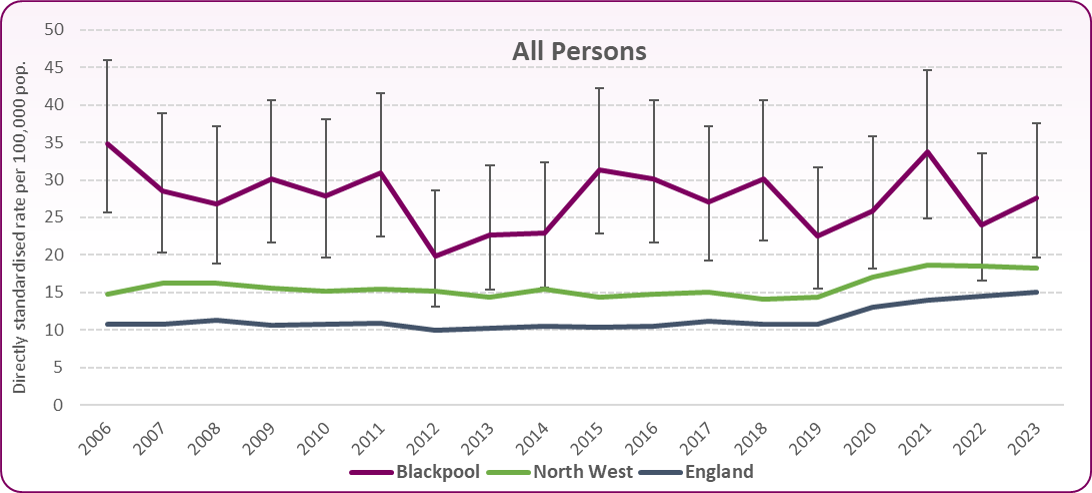
Figure 3 shows alcohol-specific mortality in Blackpool compared to the North West region and England as a whole. In 2003 the rate of alcohol specific mortality in Blackpool was 27.6 (CI 19.6-37.6) per 100,000, significantly higher than the England rate of 15.0. Blackpool has the highest rate of alcohol-specific mortality of any upper-tier local authority in the North West and has the fifth highest rate in England24.
Whilst the rate for Blackpool does show variation year to year, this is primarily due to the relatively low numbers involved and there is no evidence of any significant change in the rate since 2006. Blackpool has been significantly higher than England for the entire period. The alcohol-specific mortality rate for England remained relatively static between 2006 and 2019, however it has increased since 2020 with a similar trend for the North West.
Figure 3: Trend in alcohol-specific mortality, Blackpool, North West and England
 Source: DHSC, Alcohol Profile, 2025
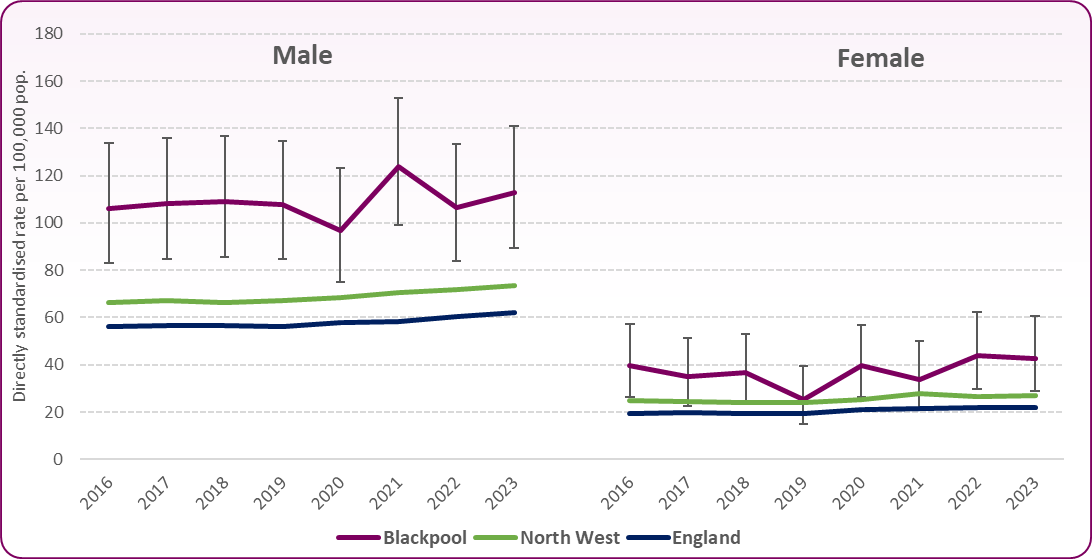
Alcohol-related mortality includes conditions wholly and partially-attributable to alcohol. Figure 4 shows the trend in alcohol-related mortality for males and females in Blackpool compared to the North West and England as a whole. There has been no significant change in alcohol-related mortality in Blackpool for either males or females since 2016.
The Blackpool rate for males has been consistently and significantly above both the North West and England rates since 2016. For females the gap between the Blackpool, North West and England rates is smaller and whilst the rate for 2023 is above the North West and England rates this has varied over time.
Figure 4: Trend in alcohol-related mortality for males and females, Blackpool, North West and England
 Source: DHSC, Alcohol Profile, 2025
Alcohol misuse is estimated to cost the NHS about £4.9 billion per year and society as a whole £21 billion annually25. Hospital admissions can be a result of regular alcohol use above lower-risk levels; in 2017 Public Health England estimated that around three-quarters of the cost to the NHS is incurred by people who are not alcohol dependent, but whose alcohol misuse causes ill health26.
Alcohol-specific admissions
-
- There were 2,020 alcohol-specific hospital admissions of Blackpool residents in 2023/24: 66% male, 34% female
- The alcohol-specific admission rate for Blackpool is significantly higher than the national average for males and females
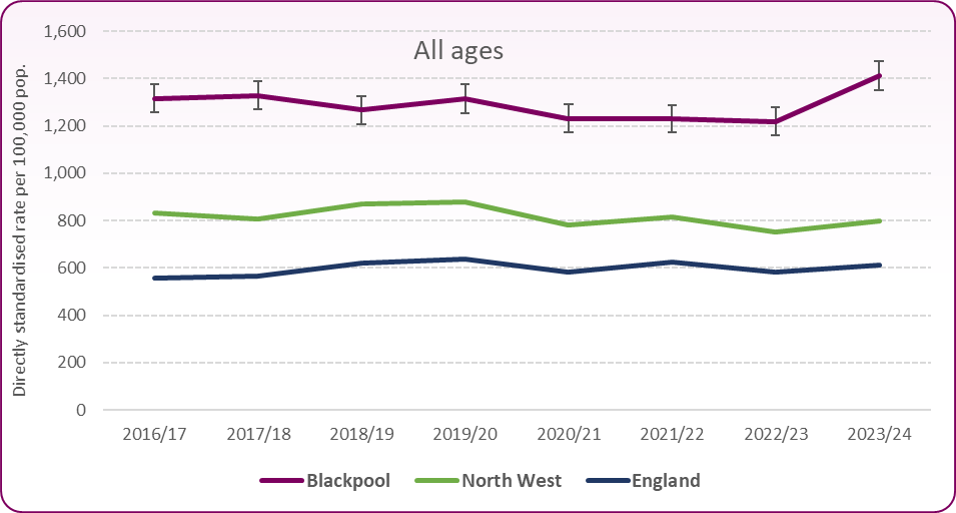
- As shown by figure 5, the rate of alcohol-specific hospital admissions has been higher in Blackpool consistently since 2016 and there is evidence of an increase in 2023/24
- Blackpool has significantly higher rates of alcohol-specific admissions for people with 0, 1, 2 or 3 previous admissions in the preceding 24 months indicating there is a pattern of frequent attendance at hospital in Blackpool that is significantly worse than England as a whole.
Figure 5: Trend in alcohol-specific hospital admissions, all ages, Blackpool, North West and England
 Source: DHSC, Alcohol Profile, 2025
Alcohol-related admissions
-
- Men account for the majority (72%) of alcohol-related admissions (broad definition[SB1] ). This reflects a higher level of harmful drinking among men compared to women overall
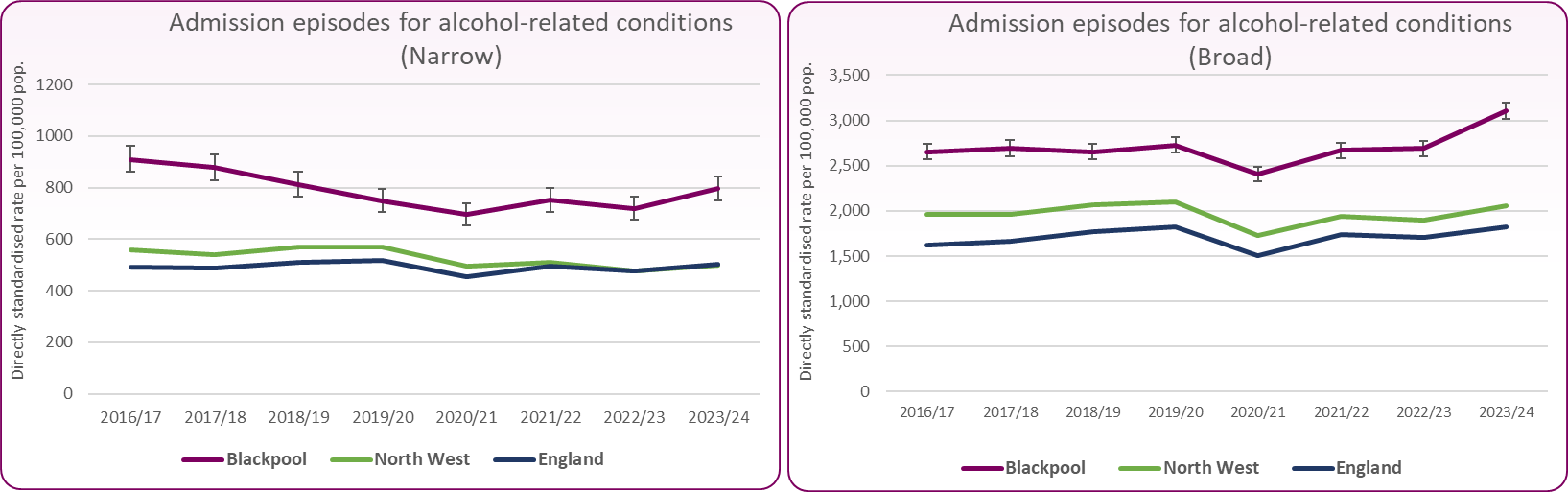
- There were 4,558 alcohol-related (broad definition) hospital admissions of Blackpool residents in 2023/24. The number and rate of alcohol admissions (broad) plateaued between 2016/17 and 2022/23 but appears to be significantly higher for 2023/24 (figure 6). This is a single year data point but is an area of concern with Blackpool having the second highest rate of admissions for alcohol (broad) in England
- Rates of alcohol-related (narrow) hospital admissions (2023/24) are significantly higher than the England average, with the rate for males at 1,012 (England 686) per 100,000. The rate for females is 595 (England 340 per 100,000). Due to the relatively small numbers, trend over time can be difficult to measure at a local level. However as shown in figure 6, there was a decline in hospital admissions (narrow) between 2016/17 and 2020/21. Rates appear to then increase from 2020/21 to 2023/24. National data also appears to follow this pattern
- There was a dip in hospital admissions related to alcohol (narrow and broad measures) in 2020/21. This coincides with COVID-19 and the closure of a range of leisure and hospitality venues. The increase since then could be due to a range of factors which could include changes in patterns of consumption or the impact of economic pressure
Figure 6: Trends in alcohol-related hospital admissions, persons, (narrow and broad definitions)
 Source: DHSC, Alcohol Profile, 2025
Hospital admissions by condition
Alcohol-related cardiovascular disease
Alcohol-related cardiovascular diseases include high blood pressure (hypertension), alcoholic cardiomyopathy (weakened heart muscle), arrhythmias (abnormal heart rhythms like atrial fibrillation), and an increased risk of heart attacks and strokes. Chronic heavy drinking can cause these conditions, which can lead to heart failure and other serious health issues.
In Blackpool, the rate of admissions for alcohol-related cardiovascular disease (broad) has increased significantly since 2016/17 from 792 to 1,025 per 100,000 in 2023/24. Over this period the gap to England has also widened, in fact in the period 2017 to 2020 there was no significant gap between England and Blackpool. The increase in the last year is significant which suggests rates may increase further in future years.
This increase is primarily due to an increase in the rate of admission episodes for men. Although the rate for women has increased it has done so to a smaller degree and from a lower baseline. The admission rate for males in Blackpool is six times higher than for women, indicating that the harm of alcohol-related cardiovascular disease does fall predominantly on men.
Alcoholic liver disease
In 2023/24 Blackpool has a significantly higher rate of admission episodes per 100,000 population for alcoholic liver disease (broad) than England, 248.4 compared with 163.4. There has not been a significant change in the rate in Blackpool since 2016, although admission rates in both England and the North West have increased.
The rate per 100,000 for males in Blackpool is nearly twice that of females (326.7 compared with 175.2), however the rate does appear to be increasing in both the North West and England. There is less evidence of this trend in Blackpool, due to the relatively small number of admission episodes.
Mental and behavioural disorders due to alcohol use (narrow)
Mental and behavioural disorders due to use of alcohol encompasses various alcohol-related conditions, including acute intoxication, alcohol dependence syndrome, withdrawal, psychotic disorders, amnesic syndrome, residual or late-onset alcohol psychiatric disorders and other mental and behavioural disorders due to alcohol.
The rate of admission episodes per 100,000 for Blackpool in 2023/24 for mental and behavioural disorders due to alcohol use (narrow) for males in Blackpool is not significantly higher than England. The gap between Blackpool and England has narrowed since 2016/17 when Blackpool was significantly higher than England.
For females the rate per 100,000 in Blackpool for 2023/24 is significantly higher than England.
The rate of admission episodes per 100,000 for mental and behavioural disorders due to alcohol use (narrow) has fallen for both male and females in the North West and England and also appears to have done so for Blackpool although this is uncertain due to the very small numbers involved. It is possible that changes in the number of admissions over time for this indicator are due to changes in admission procedure or recording.
Intentional self-poisoning due to alcohol
Admission episodes due to intentional self-poising have fallen significantly in Blackpool and to a lesser extent in the North West and England. In 2016/17 Blackpool had a rate per 100,000 of 138.9 and was significantly above England and the North West, by 2023/24 this was 24.0 in Blackpool which was not significantly different to the England rate of 22.7.
In 2016/17 the rates of admission in Blackpool due to self-poisoning were higher in men than women, but not significantly so. In the North West and England admission rates were higher for women in 2016 and still are in 2025. This is also now the case for Blackpool, although again this difference is not significant. In addition, the rates for both men and women in Blackpool are not significantly different from England. It is possible that changes in the number of admissions over time for this indicator are due to changes in admission procedure or recording.
Alcohol-related unintentional injuries (narrow)
Alcohol-related unintentional injuries are damage resulting from accidents and incidents where alcohol consumption was a contributing factor, such as falls, traffic accidents, drownings, and burns. These injuries occur because alcohol impairs judgment, coordination, and motor skills, increasing the risk of accidents and the severity of harm.
Hospital admissions due to alcohol related unintentional injuries are significantly higher in Blackpool for men compared to women with rates for 2023/24 of 136 and 24.3 per 100,000 respectively. From 2017/18 until 2022/23 the rate in Blackpool was not significantly higher than England, however for 2023/24 Blackpool was significantly above the England rate of 61.6. The actual number for 2023/24 was significantly higher than recent years although as this is only a single data point caution does need to be applied in considering whether this is a longer-term trend.
The rate for women in Blackpool is not significantly higher than England.
Incidence rate of alcohol related cancer
The incidence rate for alcohol related cancers is fairly similar with the male rate only slightly higher than the female one. In 2017-19 for Blackpool the proportion people with alcohol related cancers who are male appears higher than the national average. This is supported by the fact that for males Blackpool’s rate per 100,000 of 48.11 is significantly higher than the England rate of 38. The number of alcohol related cancers in Blackpool appears to be increasing with a count of 170 in 2004-06 and 210 for each of the last 3 time periods including 2017-18. For women in Blackpool the count has been relatively stable since 2004-06 and the Blackpool rate of 39.2 is not significantly above the England rate of 37.09.
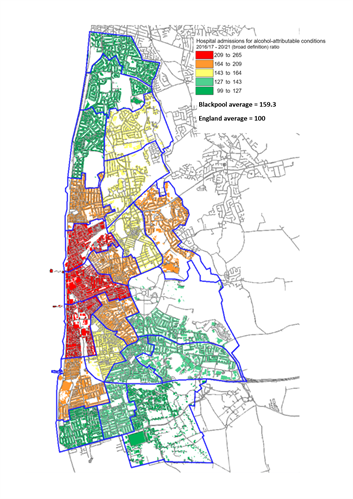
Figure 7 shows alcohol-attributable hospital admissions by ward in Blackpool. All wards, except Norbreck, have higher admission rates than the national average. This shows the harm resulting from alcohol misuse is more concentrated in the most disadvantaged areas of Blackpool. Harmful use of alcohol affects the most vulnerable groups in society - those in the lowest income bracket and those experiencing the highest levels of deprivation. Even though lower socioeconomic groups often report lower levels of average consumption, they experience greater or similar levels of alcohol-related harm.
Figure 7: Alcohol-attributable hospital admissions (broad definition) by ward, 2016/17-20/21
 Source: DHSC, Local Health Profiles, August 2023
Frequent hospital admissions
Information on individuals who are frequently admitted to hospital for alcohol-specific conditions gives an indication of the number of drinkers who place a heavy burden on health services and, very often, on social housing and criminal justice services. The fact that these people are experiencing ongoing alcohol-specific ill health suggests that they may not have had contact with treatment services, or if they have, it is unlikely that services have engaged with them for long enough for them to achieve sustained abstinence. Figure 8 shows the number (and rate) of frequent alcohol-specific admissions for Blackpool compared with England. The rate of three or more previous admissions by individuals in Blackpool is over 50% higher than the national average27.
Figure 8: Individuals with alcohol-specific hospital admissions in 2021/22 and number of admissions in the preceding 24 months
| | England | Blackpool |
|---|
| | Rate per 100,000 | Number of admissions | Rate per 100,000 |
|---|
| No previous admissions |
248 |
685 |
605 |
| 1 previous admission |
73 |
215 |
190 |
| 2 previous admissions |
38 |
90 |
80 |
| 3 or more previous admissions |
93 |
175 |
155 |
| Source: OHID, Adults - alcohol commissioning support pack 2023-24: key data |
Whilst the majority of young people do not use alcohol or drugs, and most of those who do are not dependent, drug and alcohol misuse can have a major impact on young people's education, their health, their families and their long-term chances in life. Further information on young people and alcohol-related harm in Blackpool is available in the Alcohol use in children and young people section.
Alcohol-related crime makes up a substantial portion of violent offences, 39% in England and Wales in 2023/2428, and is estimated by the Institute of Alcohol Studies to cost the criminal justice system including the police £14.6 billion per year.25
Alcohol also places a significant burden on the emergency services – three-quarters of police and half of ambulance respondents have been injured in alcohol-related incidents – while research has also highlighted the role of alcohol in domestic violence, sexual assault, child abuse, and violent crime including murder28.
Alcohol is too often a precursor and catalyst for crime and disorder in Blackpool in addition to creating health and safety issues in the wider community. Blackpool is a local authority containing some of the most deprived areas in Lancashire and England and there is a correlation between Blackpool's areas of deprivation and hotspots for violent crime, domestic abuse and criminal damage; all associated with alcohol abuse to some degree.
Visitors to Blackpool swell the local population significantly during the summer months, and they make a huge contribution to the local economy5, including via a substantial 'night time economy'. However, this can also contribute to the local crime statistics29, although local areas can take steps to reduce this impact.30
Blackpool has the highest rate of alcohol-related crime of the 14 lower tier local authorities in Lancashire at 22 per 1,000 people in 2024/25, this is more than double the next highest. The Lancashire-14 average[SB1] is 8 per 1,000. The COVID-19 pandemic did have significant impact on alcohol related crime with reduced rates during periods of lockdown, though there was a spike in alcohol related crimes in the summer of 2021 around the end of national restrictions. Since 2021 the level of crime in Blackpool has been stable with around 21,000-22,000 crimes per year in Blackpool. The number of alcohol related crimes has fallen since 2021/22 from 3,440 to 3,097 in 2024/257. Alcohol-related crime has halved in Blackpool and across Lancashire since 2018/1931.
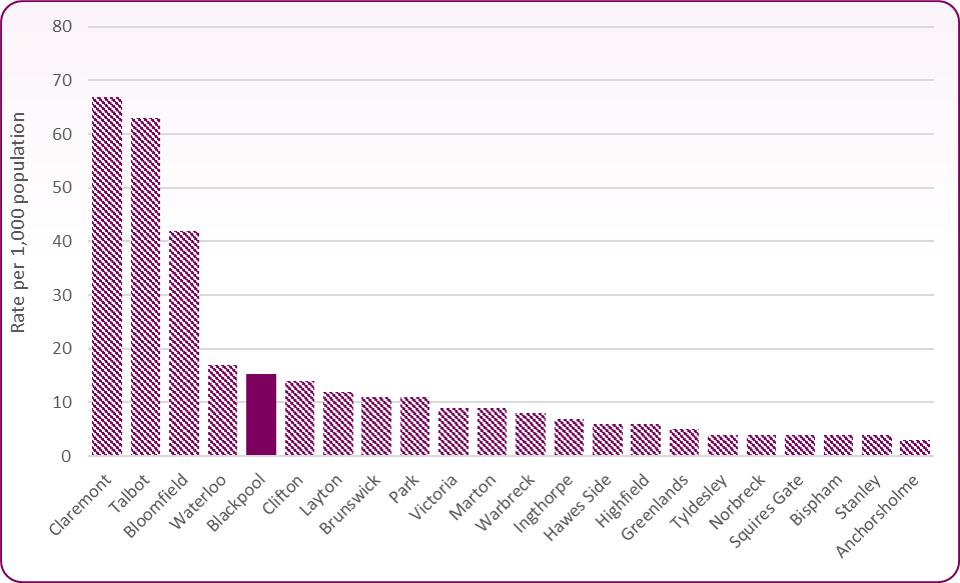
There were 9,587 violent crimes in Blackpool in 2024/25 of which 2,180 (22.7%) were alcohol related. 22.7% was the highest proportion of violent crime related to alcohol in Lancashire-14 and this is nearly 10% higher than, for example, South Ribble. The number of alcohol-related violent crimes in Blackpool has been relatively stable averaging around 2,200 per year between 2021 and 2024. In 2024/25 around 58% of alcohol-related violent crime occurred in three wards, Claremont, Talbot and Bloomfield (see figure 9). This is consistent with the wards where there are the highest number of licensed venues and is the centre of the night time economy. The proportion of violent crimes which were alcohol-related is also higher in these wards than for Blackpool as a whole (22.7%). For example 35.5% of violent crime in Claremont, in 2024, was classed as alcohol related whilst in Tyldesley it was 12.8%7.
Figure 9: Blackpool alcohol-related crime by ward, rate per 1,000: 2024/25
 Source: Lancashire Insight, MADE Partners data, 2025
There is a strong relationship between alcohol and domestic abuse, violence and sexual assault. Whilst alcohol should not be used as an excuse for those who perpetrate violence and abuse, neither should its influence be ignored. Alcohol misuse is consistently found in a high proportion of those who perpetrate domestic abuse and sexual assault, and it has been found that within intimate relationships where one partner has a problem with alcohol or other substances, domestic abuse is more likely to occur28. Blackpool has high levels of domestic violence compared to Lancashire as well as high numbers of dependent drinkers.
Alcohol treatment interventions have been shown to be effective at reducing reoffending rates with around a 50% reduction in offending for those successfully competing27.
Information on individuals who are in contact with structured alcohol treatment services is available from the National Drug Treatment Monitoring System (NDTMS) which collects, collates and analyses data from and for those involved in the drug and alcohol treatment sector.
Horizon Support Service
Horizon is the integrated drug and alcohol treatment service for residents of Blackpool. The service provides planned care and integrated community-based treatment for drug and alcohol clients. Alcohol clients can receive brief advice and interventions via the Lighthouse at Dickson Road, Blackpool or within a number of satellite sites within Blackpool. Potential service users are able to self-refer and the service will aim to offer same day assessments. Following assessment, the Lighthouse is able to offer a range of interventions with treatment options based upon the needs and complexities of each client. These include structured and unstructured interventions, one to one support and a variety of group work programmes. Structured treatment is care planned and consists of community based psychosocial interventions and clinical treatment. Community detoxification and rehabilitation are also available to clients who would benefit from these approaches. Specific police and probation programmes are delivered to people where alcohol is related to offending behaviours and these include alcohol interventions to support treatment and offender prevention.
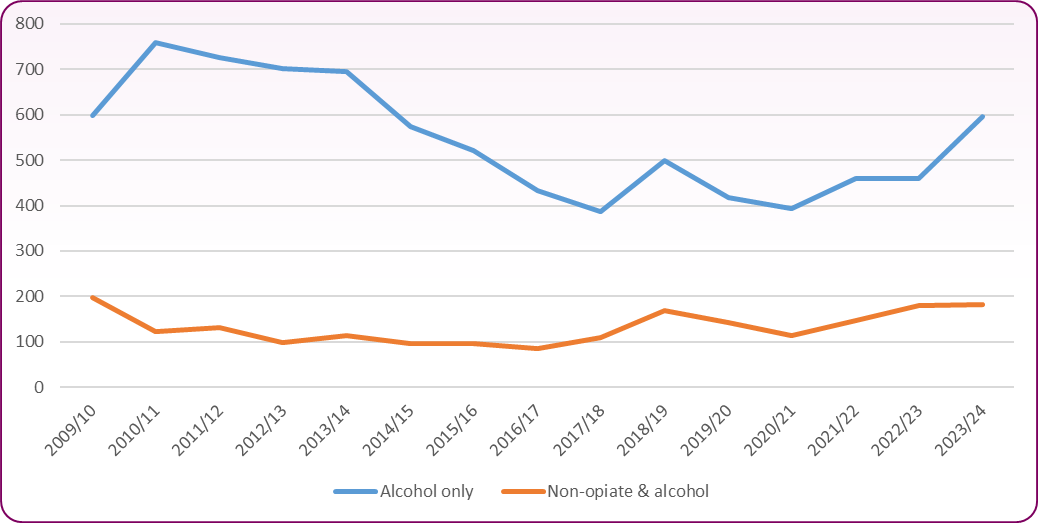
Figure 10 shows the trend in the number of alcohol clients in treatment since 2009/10. Between 2010/11 and 2017/18 there was a reduction in the number in treatment for alcohol or alcohol and non-opiates from 882 to 497. This fall in the numbers in treatment was not unique to Blackpool and in 2018 Public Health England launched an enquiry into the fall in the number of people entering alcohol treatment nationally32.
Since 2018/19 the numbers in treatment appear to have increased although this was impacted by a dip in alcohol clients in treatment during the period of COVID-19 restrictions. In 2023/24 there were a total of 778 alcohol and alcohol and non-opiate Blackpool clients in service.
Figure 10: Trend in number of 'alcohol only' and 'non-opiate and alcohol' clients in treatment - Blackpool residents
 Source: NDTMS, 2025
The numbers in treatment for alcohol however remain low in comparison with estimated local prevalence estimates of alcohol-related need. Local estimates for Blackpool are uncertain due to the relatively small numbers involved, however in 2023/24 the estimated unmet need for alcohol (i.e. those in need of treatment who are not in treatment) was estimated at 82.1% with a confidence range of 52%–93%.
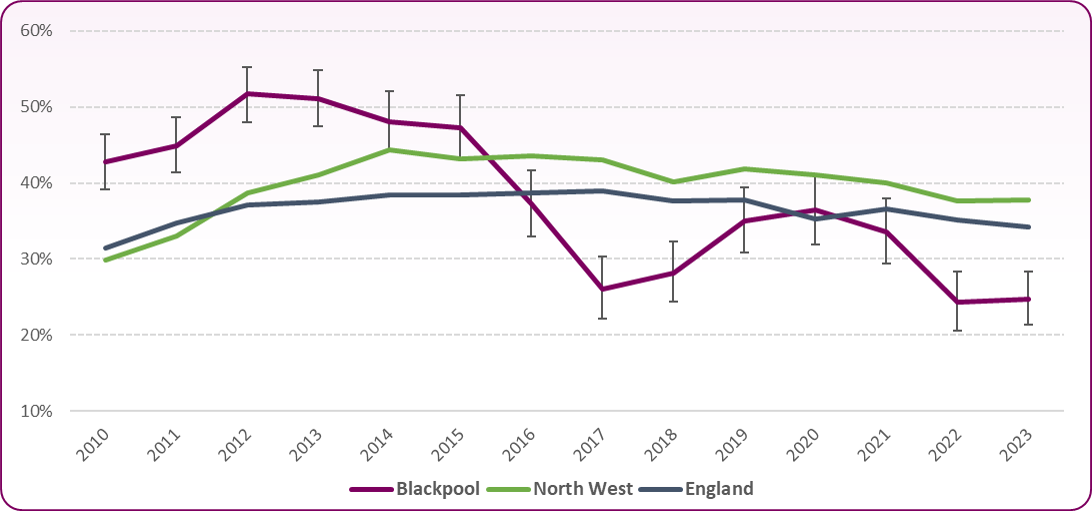
As shown in figure 11, the percentage of successful completions in Blackpool has fallen in recent years from 51.1% in 2013 to 24.7% in 2023. During this same period Blackpool has gone from being significantly above England for the completion percentage to now being significantly worse. This coincides with an overall drop in the number of people in treatment and this may influence treatment outcomes.
Figure 11: Trend in the percentage of successful completions, Blackpool, North West and England
 Source: NDTMS, 2025
The fall in the number of people entering alcohol treatment is linked to the number of referrals into service and the proportion of those referred who actually enter treatment. This also potentially impacts upon successful completions as those who do actually enter treatment are potentially those with higher levels of alcohol dependency. This need to improve routes into referral has been recognised within the Blackpool Alcohol Prevention and Harm Reduction Strategy and steps have been taken to increase the number of referrals. Alongside this a key performance indicator has been developed around increasing the percentage of referrals that result in treatment33.
The gender and age split of those accessing treatment was broadly in line with the national picture for treatment services. In 2023/24, 63% of the alcohol only clients in Blackpool were male and 37% were female27. This is similar to England where the split was 60% to 40%. The Health Survey for England (HSE) 2022 found that a higher proportion of men (32%) than women (15%) drank at increasing (14-34/49 units) or higher risk levels (defined as males drinking over 50 units weekly and females drinking over 35 units weekly). Higher risk drinkers are the group most likely to need of treatment. In 2022 6% of men and 4% of women typically drank more than this16. As a result, the gender split seen entering treatment service is broadly in keeping with the gender split we would expect in the population of highest risk drinkers locally.
The 2025 Healthwatch report, 'Attitudes to Alcohol and Alcohol Services in Blackpool', suggested that access to alcohol services for women could be enhanced via a female-only centre service. This also flagged a ‘wine culture’ around some female drinkers who are unlikely to engage with traditional alcohol treatment services due to possible stigma34.
The age breakdown of people drinking at increased and higher risk varies by sex. For men the prevalence of drinking over 14 units increases by age from 16-24 (24%) until 65–74 (40%), before then decreasing for over 75s (32%). Women aged 16–24 have a higher prevalence (14%) than 25–34 (9%) and 35–44 (13%), there is then a peak at 55–64 (23%), before prevalence falls from 64 onwards16.
The age profile of adults in treatment for alcohol in Blackpool are broadly consistent with those of England as a whole. Compared with the estimates of higher risk drinking behaviour there are variations in the number of younger and older people in treatment compared with risk-based estimates, although this may be impacted by the size of these populations. 'Attitudes to Alcohol and Alcohol Services in Blackpool' suggested additional outreach to older people and support to tackle loneliness and isolation could help reduce the risks of excessive consumption and health harms34.
The 'Attitudes to Alcohol and Alcohol Services in Blackpool' report also found evidence that LGBT+ people used alcohol to cope with a range of anxiety and trauma often related to issues around gender identity, sexuality and stigma. The report suggested developing a LGBT+ specific support programme and additional staff training to improve engagement and retention of LGBT+ people in treatment34.
Drinking levels
Most people who require structured treatment for alcohol dependence will be drinking at higher risk levels. Drinking levels can be used as a rough proxy for level of dependence and levels of alcohol health risk. An indication of drinking levels in treatment may be useful in understanding which groups of adults are receiving treatment and whether those with the highest levels of harm are receiving effective interventions.
There is a strong association between levels of consumption and severity of dependence but they are not equivalent. For example, women are likely to become dependent at lower levels of consumption than men. Data for 2021/22 shows that a higher proportion of those entering treatment in Blackpool are consuming over 600 units in the 28 days prior to commencing treatment compared to England. In Blackpool 38% of those entering treatment consumed 600+ units compared with 30% in England. Consumption in excess of 600 units in the 28 days prior to treatment varies considerably by sex, with a higher proportion of men (41%) than women (30%) in Blackpool consuming above this threshold27.
Clients who are parents/carers and their children
Research suggests that children experience negative outcomes as a result of their parents’ alcohol use, even amongst moderate drinkers.35
Data from NDTMS shows the number of alcohol only clients who entered treatment in 2021/22 who live with children and the stated number of children who live with them. Across Blackpool, 14% of alcohol clients were parents with a child who lived with them compared with 21% in England as a whole. A further 10% of clients in Blackpool had children but did not live with them compared with 13% nationally. A higher proportion of women in treatment in Blackpool live with a child (24%) than men (9%) which is not unexpected but the gap between them is greater than in England as a whole (28% - 17%), however given the low numbers this may not be a significant difference.
22% of Blackpool clients in treatment who are in contact with their children have early help or children’s social care involvement, a slightly lower proportion than England’s 28%, however given the low numbers this may not be a significant difference.
Research has shown a number of barriers that women either experience or expect when seeking treatment.36 These include:
-
- Caring responsibilities for children and fear of losing them
- Child custody arrangements
- Being dishonest with themselves about how serious the problem is
- Denial and minimisation of use, from which a health trigger may prompt the accessing of support
- Lack of knowledge re: options
- Inaccurate ideas about treatment
- Societal and self-stigma
- Economic issues and/or stigma
- Responsibilities, children, work, lack of free time
- Waiting times, many women feel they need immediate support before the moment passes
National and local strategies
The Blackpool Alcohol Prevention and Harm Reduction Strategy 2024-27 (2.5MB) provides an overview of the strategic priorities for Blackpool.
The Blackpool Joint Local Health and Wellbeing Strategy (JLHWS) 2024 – 2028 sets out the local priorities to help improve the health and reduce health inequalities. Alcohol is recognised as one of the root causes of ill-health in Blackpool and addressing and preventing alcohol harm is therefore a key to improving health outcomes for residents.
The Blackpool Community Safety Plan, 2022-2025 sets out the analysis of crime, disorder and substance misuse and has identified the priorities that are of greatest threat to local people as well as where successful interventions will improve the quality of life in Blackpool.
The Blackpool Cumulative Impact Assessment 2021 relates to on and off licenced premises applications for the sale or supply of alcohol and was introduced as a tool to limit the growth of licensed premises in problem areas.
Fit for the future, the 10 year health plan for England (July 2025) sets out the plan for the health service in England. It recognises the significant impact that alcohol can have on health in particular in places like Blackpool. It also sets out the actions that the Government proposes to help address alcohol harm.
The last Alcohol Strategy for England was published in 2012. This is now somewhat out of date and may not be reflective of current Government Policy.
The 10-year strategic plan for the drug and alcohol treatment and recovery workforce (2024–2034) sets out the long-term strategy to develop the workforce required to improve treatment and recovery outcomes.
NICE guidance [PH24] Alcohol-use disorders: prevention (2010) covers alcohol problems among people over 10. It aims to prevent and identify such problems as early as possible using a mix of policy and practice.
NICE Quality standard [QS83] Alcohol: preventing harmful use in the community (2015) covers preventing and identifying alcohol problems in the community. It includes policy and practice approaches to prevent harmful alcohol use in adults, young people and children. It is particularly relevant to local authorities, the police, and schools and colleges. It describes high-quality care in priority areas for improvement,
The Public Health Burden of Alcohol and the Effectiveness and Cost-Effectiveness of Alcohol Control Policies. This evidence review looks at the impact of alcohol on the public health and the effectiveness of alcohol control policies, December 2016.
PHE, Health matters: harmful drinking and alcohol dependence provides information on the harmful impact of alcohol and focuses on alcohol dependence.
The following priorities are from the Blackpool Alcohol Prevention and Harm Reduction Strategy 2024-27:
- Strategic Priority 1: Overcome the legislative barriers, such as MUP and licencing objections, that block population level change in relation to harmful alcohol consumption
- Strategic Priority 2: Better inform children, young people and parents about the potential harm of alcohol use in childhood.
- Strategic Priority 3: Ensure we intervene early to reduce alcohol harm in children, young people and their families.
- Strategic Priority 4: Stop stigma to improve access to services when people need it and to maintain recovery.
- Strategic Priority 5: Improve the options and take up by people facing challenges in their use of alcohol for treatment, recovery and aftercare.
- Strategic Priority 6: Effectively identify and address co-occurring mental health and alcohol issues.
- Strategic Priority 7: Reduce repeat admissions for hospital and prison.
- Strategic Priority 8 Reduce the impact of alcohol on families and the outcomes for children.
[] NHS Digital, Health Survey for England, 2022 - Adult drinking
[] OHID, Estimates of alcohol dependent adults in England: summary, March 2024
[] WHO, Fact sheets, Alcohol, June 2024
[] Barnardo's, Alcohol and other drug misuse [Accessed 24/29/2025]
[] Marketing Lancashire, STEAM Tourism Economic Impacts 2023, Key Impacts by Local Authority
[] DHCS, Fingertips Alcohol Profile, Premises licensed to sell alcohol per square kilometre, 2023/24
[] Lancashire County Council, Community safety, MADE
[] NICE Guidance [PH24], Alcohol-use disorders: prevention, June 2010
[] OHID, CHIME - COVID-19 Health Inequalities Monitoring for England tool
[] Aan Het Rot M, Baltariu IC, Enea V. Increased alcohol use to cope with COVID-19-related anxiety one year into the coronavirus pandemic Nordisk Alkohol Nark. 2023 Feb 3;40(2):146–159
[] PHE, Monitoring alcohol consumption and harm during the COVID-19 pandemic: summary, July 2021
[] Institute of Alcohol Studies, Young Adults Reduced Drinking During and After Pandemic, May 2024
[] Divya Ayyala-Somayajula, Jennifer L. Dodge, Adam M. Leventhal, et al. Trends in Alcohol Use After the COVID-19 Pandemic: A National Cross-Sectional Study. Ann Intern Med.2025;178:139-142.
[] Institute of Alcohol Studies, The COVID Hangover: addressing long-term health impacts of changes in alcohol consumption during the pandemic, July 2022
[] DH, UK Chief Medical Officers' Low Risk Drinking Guidelines, August 2016
[] HSE 2022, Adult-drinking-tables.xlsx
[] Bellis, M. A., Highes, K., Nicholls, J., Sheron, N., Gilmore, I. and Jones, L. (2016) The alcohol harm paradox: using a national survey to explore how alcohol may disproportionately impact health in deprived individuals, BMC Public Health, 16:1
[] Anurag Sharma, Kompal Sinha, Brian Vandenberg. Pricing as a means of controlling alcohol consumption. British Medical Bulletin, Volume 123, Issue 1, September 2017, Pages 149–158
[] Public Health Scotland, Minimum unit pricing reduces alcohol-related harm to health, June 2023
[] NHS Digital, Adult Psychiatric Morbidity Survey: Survey of Mental Health and Wellbeing, England, 2014
[] NDTMS, ViewIt - community adult profiles [Accessed 24/09/2025]
[] Blackpool Council, Community and Environmental Services, Public Protection Commercial Enforcement
[] PHE, Health matter: harmful drinking and alcohol dependence, January 2016
[] DHCS, Fingertips - Alcohol Profile
[] Institute of Alcohol Studies, Economy [Accessed 24/09/2025]
[] UKHSA, Health Matters: preventing ill health from alcohol and tobacco use, October 2017
[] OHID, Adults - alcohol commissioning support pack 2023-24: key data
[] Institute of Alcohol Studies, Violence and crime [Accessed 24/09/2025]
[] Wüllenweber S. & Burrell A. The crime and the place: Robbery in the night‐time economy (2024) Journal of Investigative Psychology and Offender Profiling, 21(1), 3–19
[] LGA, Approaches to managing the night-time economy - case studies, July 2019
[] Lancashire Insight, MADE Partners data, March 2022
[] PHE inquiry into the fall in numbers of people in alcohol treatment: findings - GOV.UK
[] Blackpool Alcohol Prevention and Harm Reduction Strategy Refresh 2024-27
[] Summary Attitudes to Alcohol & Alcohol Services In Blackpool
[] Institute of Alcohol Studies, One in three children report negative outcomes from parents’ drinking, November 2019
[] Gremeax, L. Roets, G. Schamp, J. Simonis, S. Vanderplasschen, W. (2021) Research Report – Women’s Views on Barriers and Facilitators for seeking Alcohol and Drug Treatment in Belgium: Nordic Studies on Alcohol and Drugs Vol. 38 (2) 175-189. SAGE