Colorectal Cancer
Last Modified 09/07/2026 09:36:19
Share this page
Introduction
Cancer Research UK provides a brief guide to colorectal (bowel) cancer that includes information about symptoms, early detection, screening and possible risk factors.
Facts and figures
Incidence of colorectal cancer
Incidence is defined as the number of new cases identified in a given period of time.
In Blackpool each year there are approximately 118 new cases of colorectal cancer identified (based on 2020-2022 data).1 Figure 1 shows the trend in the cancer incidence rate for the Blackpool sub-location (formerly NHS Blackpool clinical commissioning group) and England. The incidence rate (in this case per 100,000 population all ages) is calculated to allow comparison between geographies of different population sizes and with different sex and age make ups.
Based on 2022 data for Blackpool, males have a significantly higher rate of colorectal cancer (105.9) compared to females (63.3), although incidence is statistically similar for both sexes compared to England (86.8 for males, 60.2 for females).
Figure 1 - incidence of colorectal cancer - 2001-2022 annual trend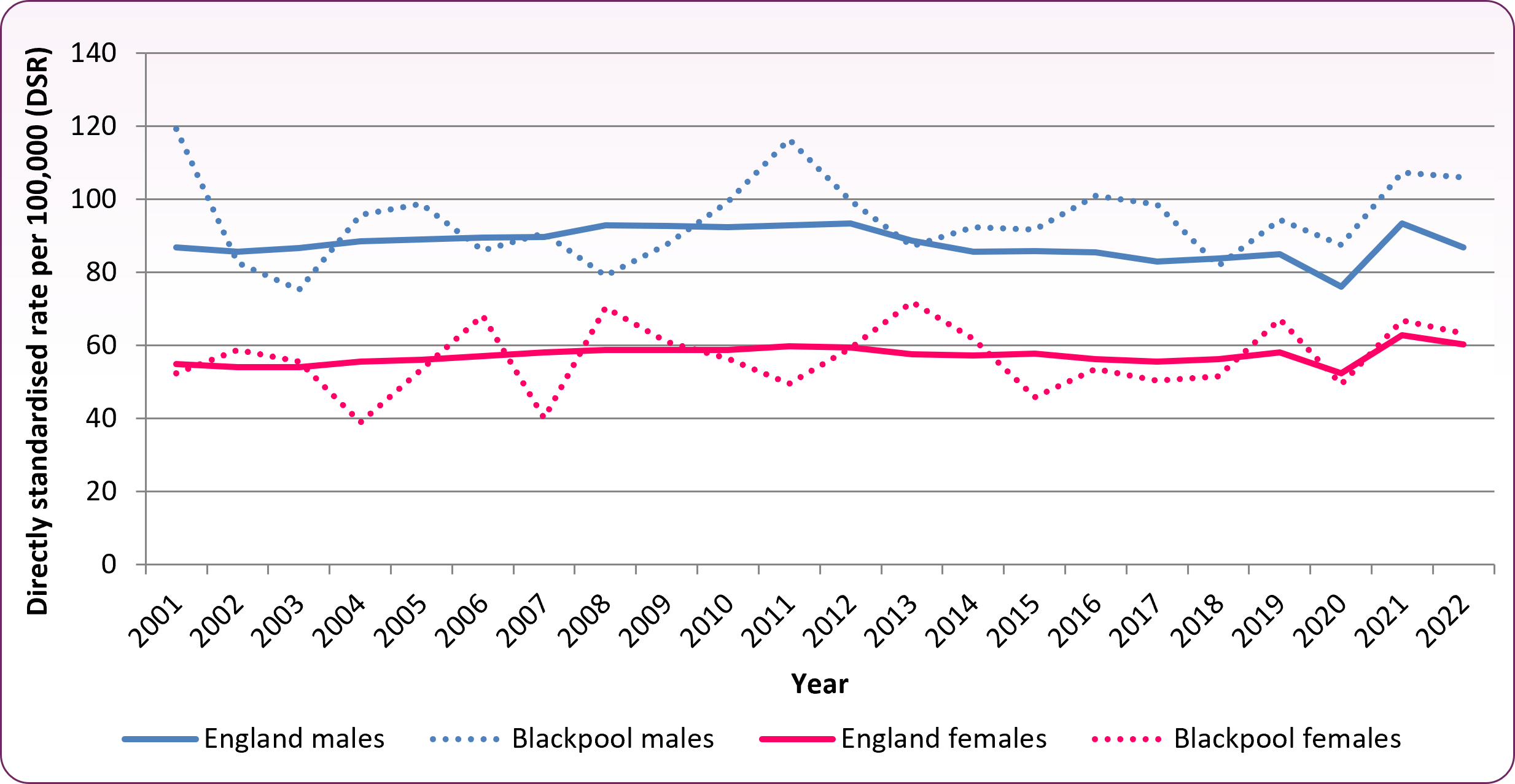
Source: Cancer data NHS Digital (as of July 2026)
Mortality from colorectal cancer
Each year in Blackpool there are approximately 50 deaths due to colorectal cancer. The directly standardised mortality rate (in this case per 100,000 population all ages) is calculated to allow comparison between geographies of different population sizes and with different sex and age make ups. Figure 2 shows that Blackpool's rate (33.6) is significantly higher than England's rate (25.5) (2022-24) and is fourth highest across all lower tier local authorities.
Figure 2 - mortality from colorectal cancer - 2022-24 - lower tier local authorities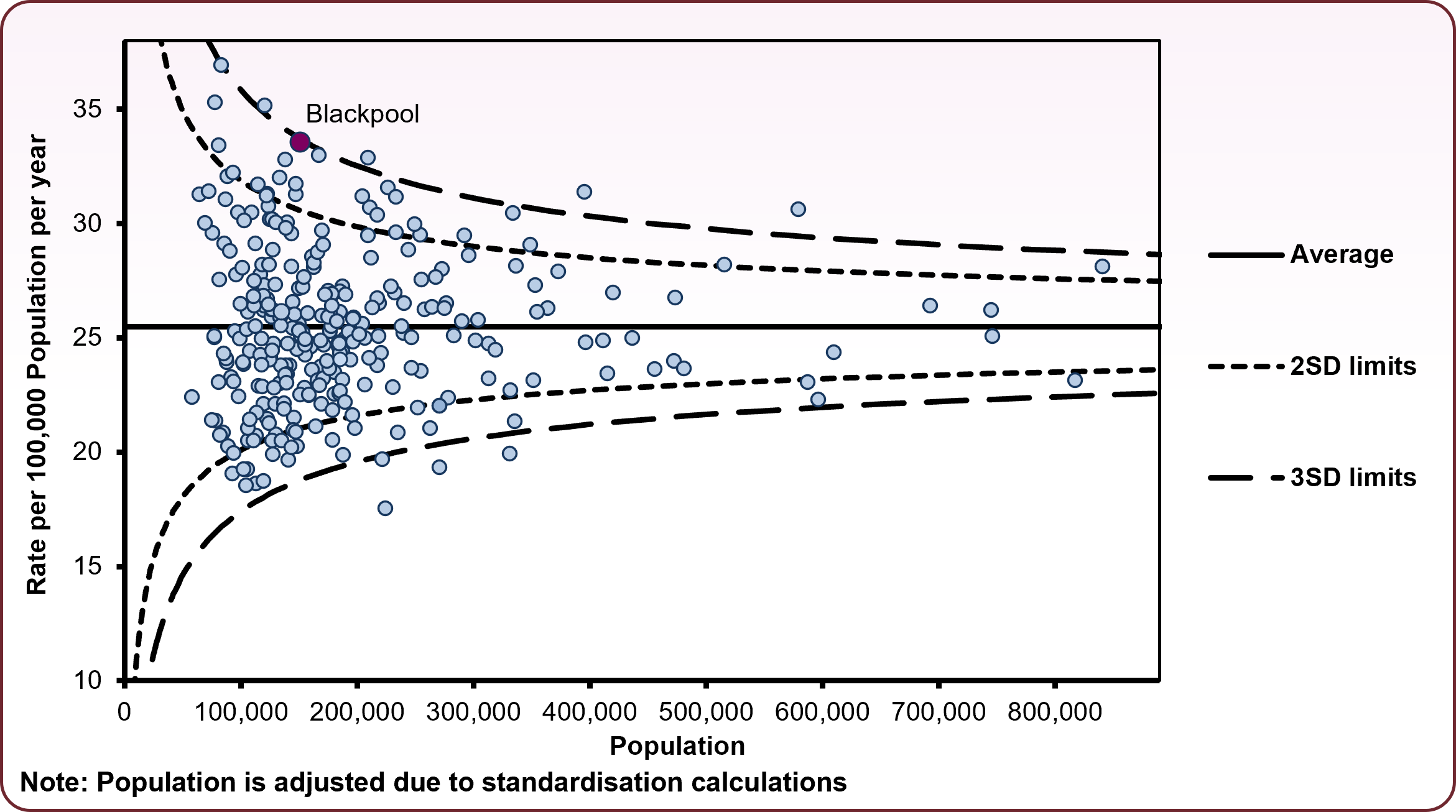
Source: OHID, Mortality Profile
Colorectal cancer survival rates
Cancer survival rates are estimates of the percentage of people still alive after a specific amount of time following a diagnosis. It usually only refers to primary cancers and does not include secondary cancers or recurrences.
The one-year colorectal cancer survival rate for England has increased steadily since 2005. However, the survival rate for the Blackpool sub-location area has fallen over this period. In 2020, the survival rate for colorectal cancer in Blackpool was 71.4%, compared to a high of 74.1% in 2009. Across England the one-year survival rate in 2020 was 80.5%. (please note, this is the most recent data available as of July 2026).
The NHS administers a national bowel screening programme aimed at detecting early symptoms of bowel cancer. Improvements in bowel cancer screening coverage would mean more bowel cancers are detected at more treatable stages, and more polyps would be detected and removed, reducing the risk of bowel cancer developing. The definition of the bowel cancer screening coverage measure is the proportion of people resident in the Blackpool area (determined by postcode of residence) aged 60-74-years, eligible for bowel cancer screening (screened adequately within the previous 2.5 years).
In 2021 (during COVID-19), screening levels fell in Blackpool and across the North West, though the England average rose slightly. In 2025, Blackpool's rate was 65.9% compared to 72.9% across England. Although Blackpool's rate is increasing and getting better, it is still significantly lower than England.
Figure 3 - bowel cancer screening coverage - 2015-2025 annual trend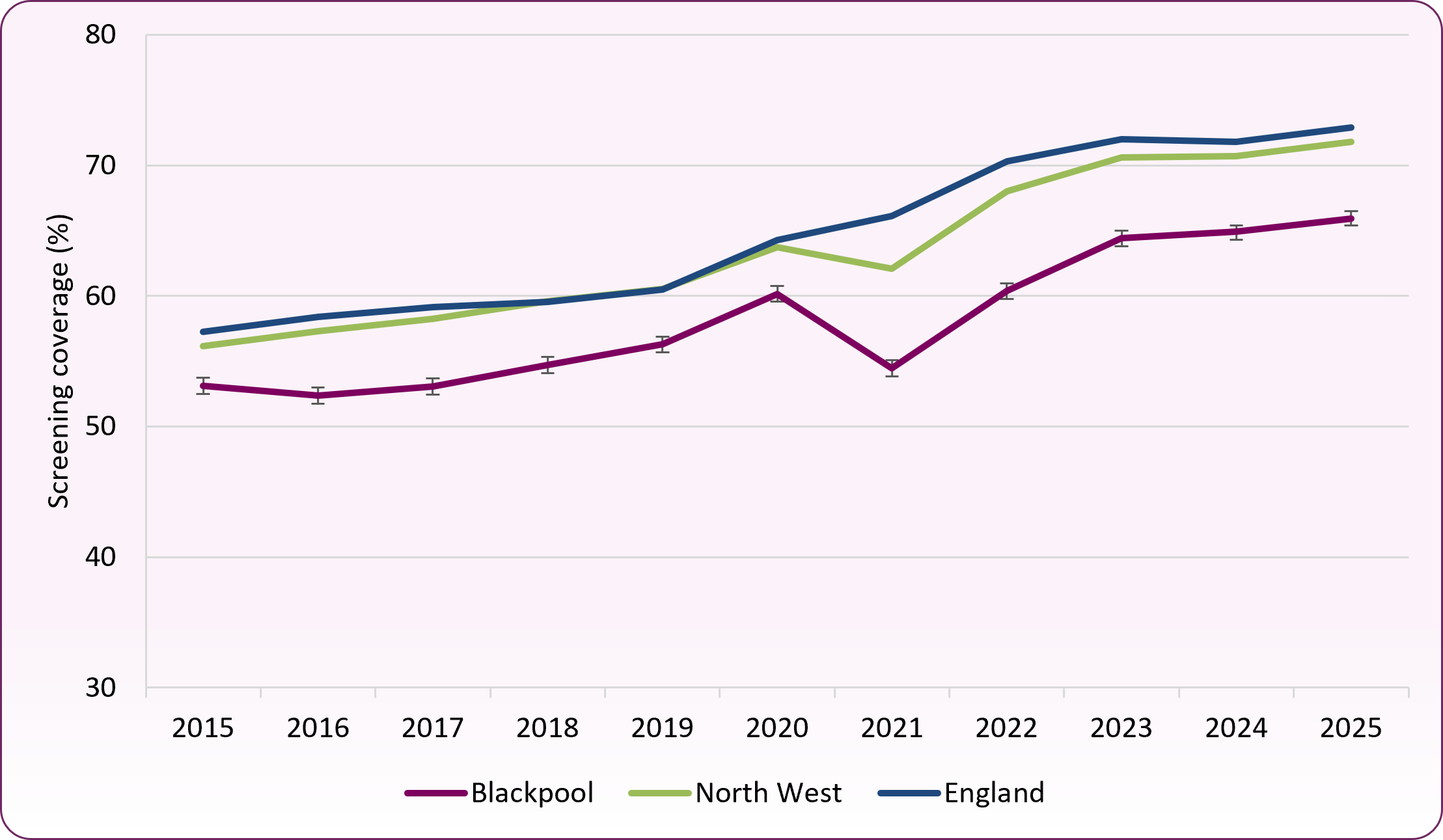
Source: Office for Health Improvement and Disparities.Public health profiles
National and local strategies (current best practices)
-
- National Institute for Health and Care Excellence (NICE) provide guidance, advice, NICE Pathways and quality standards on colorectal cancer
Risk factors
Cancer Research UK has compiled a summary of risk factors and causes of colorectal cancer.
Colorectal cancer definition here includes malignant neoplasm of colon and rectum / rectosigmoid junction (ICD10 C18-C20 categories) but not of small intestine or anus. Mortality data includes both cancers of small intestine and anus.