Dental Health
Last Modified 14/05/2026 15:55:25
Share this page
Introduction
Tooth decay is the most common oral disease affecting children and young people in England, yet it is largely preventable.
Although oral health is improving in England, the oral health survey of 5 year olds in 2024 showed that over a fifth have tooth decay. Each child with tooth decay will have on average 3 to 4 teeth affected. For those children at risk, it can happen early in life. The oral health survey of three-year-olds in 2020 found that 11% had visible tooth decay, with on average three teeth affected.
While 77% of five-year-old children in England are now free of obvious tooth decay, significant regional inequalities remain – with children from the most deprived areas having more than twice the level of decay, than those from the least deprived.
Almost 9 out of 10 hospital tooth extractions among children aged 0 to 5 years are due to preventable tooth decay and tooth extraction is still the most common hospital procedure in 5 to 9 year olds, according to data up to 2024.1
Maintaining good oral health during childhood is essential and is the basis for good oral health in adulthood. Improvements in oral health are most likely to be achieved by ensuring the adoption of the single most important measure in contributing to improvements in oral health over the last 40 years, namely brushing with fluoride toothpaste twice daily.
The management of tooth decay and its consequences is also costly to society. Improving the oral health of children is a national priority linked to a key policy - Best Start in Life. Local Authorities now have responsibility for the commissioning of community oral health promoting interventions to bring about the expected oral health improvement for children and are supported by the Office for Health Improvement and Disparities (OHID) to discharge this function.2
Facts, figures and trends
The oral health of children living in Blackpool remains a concern, with high levels of tooth decay. This is because, as with other non-communicable diseases, tooth decay is associated with deprivation.3 Oral health is poor, with levels of decay in children aged three-, five- and 12-years olds worse than the national average. Poor oral health is associated strongly with social deprivation in the child population and although improvements have been made, tooth decay remains one of the most common diseases of childhood affecting physical and psychological wellbeing and quality of life.
Data from the Dental Public Health Epidemiological Programme Oral Health Surveys shows:
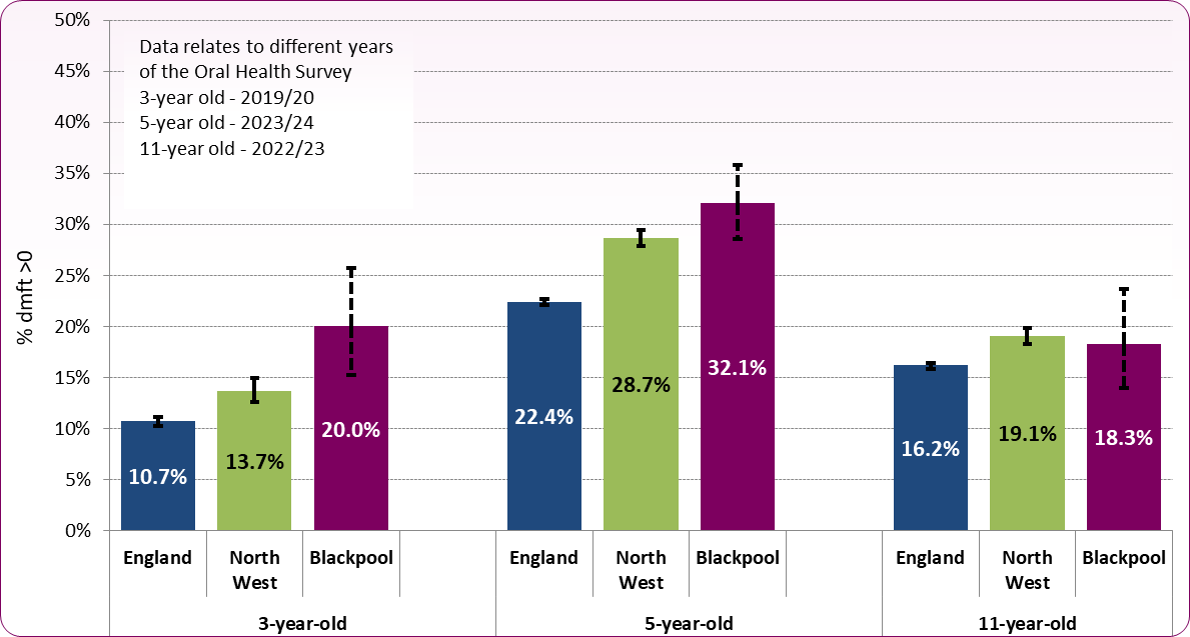
- 20% of Blackpool's three-year olds were affected by visually obvious dental decay in 2019/20, an increase of 3.1% from 2012/13 and significantly higher than the England average of 10.7%
- 32.1% of Blackpool's five-year olds were affected by visually obvious dental decay in 2023/24, a slight increase from 31.2% in 2021/22 and significantly higher than the England average of 22.4%
- 18% of Blackpool's 11-year-olds were affected by dental decay in 2022/23, slightly higher than the England average of 16%
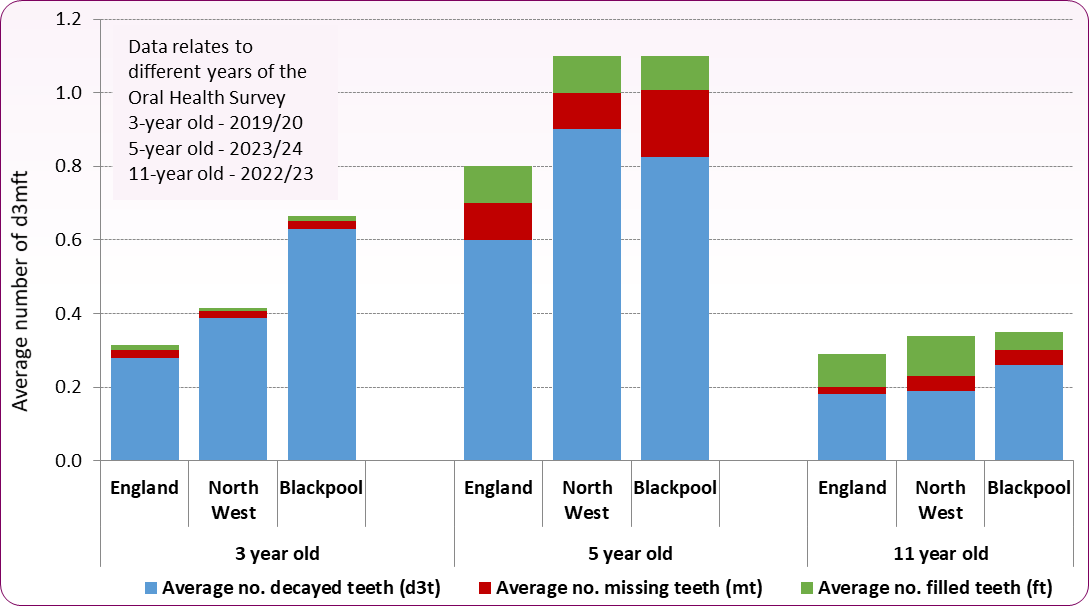
- The average number of decayed, missing or filled teeth in five-year-olds in Blackpool is 1.1, higher than the national average of 0.8
- In all age groups, decayed teeth are more common than missing or filled teeth.
Figure 1 shows the proportion of children in Blackpool affected by dental decay as measured by the dmft index (d3mft: d3-decay into dentine, m-missing, f-filled, t-teeth) compared to the North West and England average. Figure 2 shows the severity of the dental decay, that is, the average number of teeth decayed, missing or filled per child.
Figure 1: prevalence of dental decay - the proportion of children affected by dental decay, Blackpool compared to England and the North West
 Source: Dental Public Health Epidemiological Programme Oral Health Surveys
-
- The average number of decayed, missing or filled teeth in three-year-olds is 0.67, compared to 0.31 nationally.
-
- While the number of missing or filled teeth in 3-year-old children in Blackpool is similar to England, the number of decayed teeth is significantly higher. By age 11 the number of missing and decayed teeth is higher than average while the number of filled teeth is much lower.
Figure 2: severity of dental decay - the average number of decayed, missing and filled teeth per child, Blackpool compared to England and the North West
 Source: Dental Public Health Epidemiological Programme Oral Health Surveys
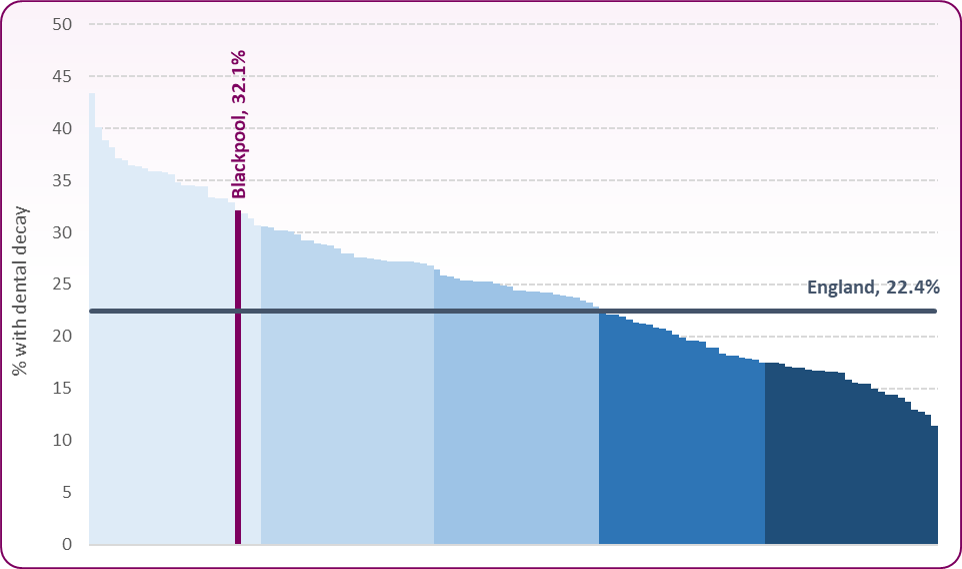
The level of dental decay in five-year-old children is a useful indicator of the success of a range of programmes and services that aim to improve the general health and wellbeing of young children. Figure 3 compares Blackpool with all upper-tier local authorities in England for the proportion of five-year-olds with experience of visually obvious dental decay. With 32.1% of five-year-olds with dental decay, Blackpool is in the highest quintile (top 20%) for this measure, significantly higher than the England average of 22.4%.
Figure 3: the proportion of children aged five-years-old with experience of visually obvious dental decay, Blackpool compared to upper-tier local authorities: 2023/24
 Source: Office for Health Improvement and Disparities (OHID), Dental Public Health Epidemiology Programme for England: oral health survey of five-year-old-children, 2023/24
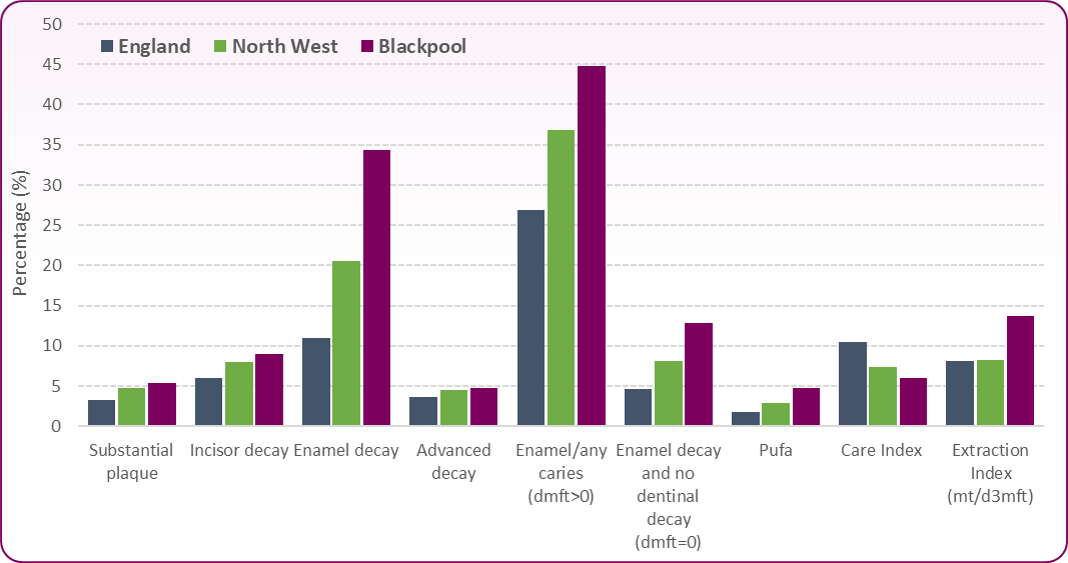
Figure 4 shows other measures of dental disease among five-year-olds in Blackpool, providing further indications of the extent of the oral health of children in Blackpool. The severity of dental disease is significantly worse than the England average.
-
- The proportion of children with substantial plaque in Blackpool is significantly higher than the national average - this is indicative of non-brushing
- Almost half (45%) of Blackpool children have enamel caries compared to 27% across England
- 9% have decay affecting the incisors which is linked with long term use of a feeding bottle with drinks containing sugar.
- 5% have oral conditions resulting from untreated caries; visible pulp, ulceration, a fistula or an abscess (PUFA) compared to only 2% nationally.
- The Care Index (% of teeth with decay that has been treated by filling) gives an indication of the restorative activity of dentists in each area. The proportion of children aged five in Blackpool who have had their decay treated by filling (6%) is lower than the North West and England averages, 7.4% and 10.4% respectively
- The Extraction Index (the proportion of those with missing teeth related to extraction) was 13.7% among five-year-olds in Blackpool in 2023/24, higher than the average for both England (8.1%) and the North West (8.2%)
- Both the Care Index and Extraction Index will be affected by access to dentistry and the increases seen locally and nationally in 2023/24 are likely due to the continued recovery of services after the pandemic
- Given that the oral health of children is significantly worse than average, the lower than average Care Index and higher Extraction Index suggests that children in Blackpool aren't getting the dental treatment they need.
Figure 4: measures of disease among five-year-olds, Blackpool compared to the North West and England, 2023/24
 Source: OHID, Dental Public Health Epidemiological Programme for England: oral health survey of five-year-old children, 2023/24
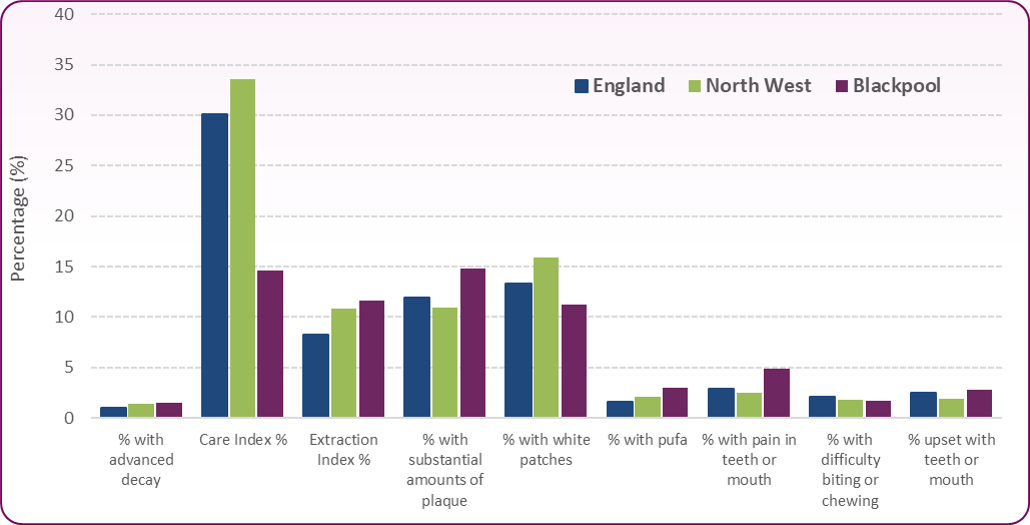
Figure 5 shows the same measures of dental disease among 11-year-old children. Children who experience early childhood caries are much more likely to develop subsequent problems, including an increased risk of further caries in both their primary and permanent teeth.
-
- The Care Index gives an indication of the restorative activity of dentists in each area. The proportion of children aged 11 in Blackpool who have had their decay treated by filling (14.6%) is significantly lower than the North West and England averages, 33.6% and 30.1% respectively
- The Extraction Index was 11.6% among 11-year-olds in Blackpool in 2022/23, significantly higher than the average for England (8.3%)
- 1 in 7 have substantial amounts of plaque and 1 in 20 report pain with their teeth or mouth.
Figure 5: measures of disease among 11-year-olds, Blackpool compared to the North West and England, 2022/23
 Source: OHID, Dental Public Health Epidemiological Programme for England: oral health survey of eleven-year-old children, 2022/23
The NHS Business Services Authority provides data on NHS dental activity (private dental services are not included) and shows:
-
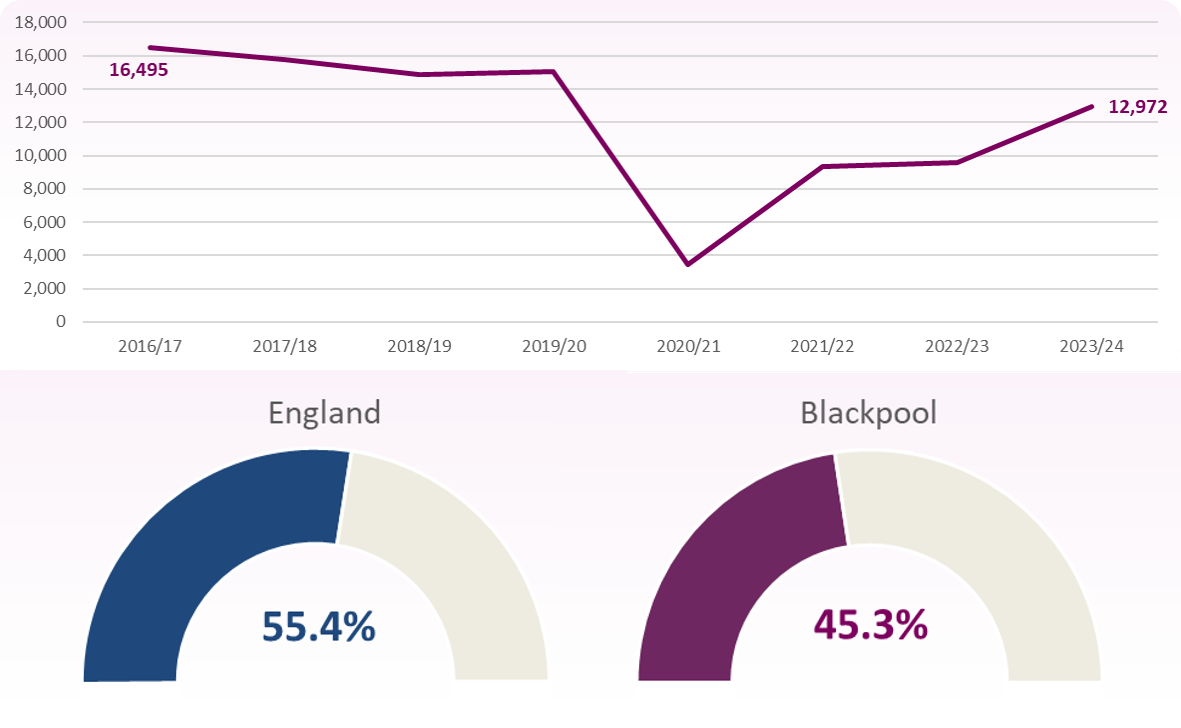
- 12,972 (45.3%) children aged 0-17 years in Blackpool received NHS dental care in the twelve months 2023/24, significantly fewer than the 55.4% of children seen across England
- Numbers accessing dental care fell by almost 80% in March 2020 due to the coronavirus pandemic and while numbers are increasing they are not back to pre-pandemic levels.
Figure 6: trend in NHS dental activity in Blackpool children aged 0-17 years and proportion seen 2023/24
 Source: NHS Business Services Authority, NHS Dental Statistics: 2023-24
Tooth decay is still the most common reason for hospital admissions in children aged between five and nine years old.4 General anaesthetic is often given to children undergoing multiple tooth extractions to reduce pain and anxiety and dental treatment under general anaesthesia presents a small but real risk of life-threatening complications for children.5 Data from the Office for Health Improvement and Disparities (OHID) show that in Blackpool:
-
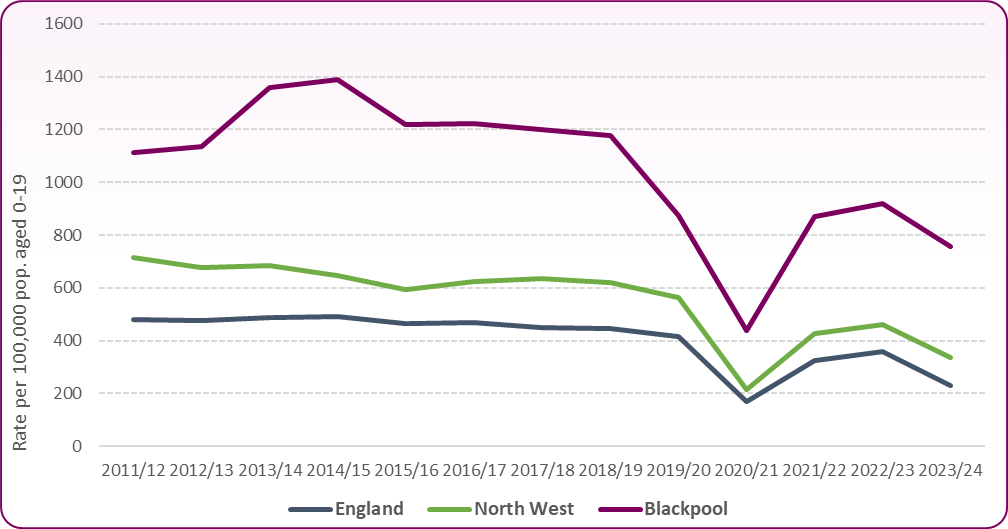
- 270 young people aged 0-19 were admitted to hospital for tooth extraction in 2023/24. This is a rate of 850.9 per 100,000 population
- The hospital admission rate is over two times higher than the national average of 368.0 per 100,000
- Hospital admissions for extractions fell in 2020/21 due to the coronavirus pandemic and had been increasing again nationally and locally, but fell again in 2023/24 (figure 7)
- 90% of the admissions for tooth extractions in Blackpool were due to decayed teeth, this compares to 62% of the admissions being for dental decay across England
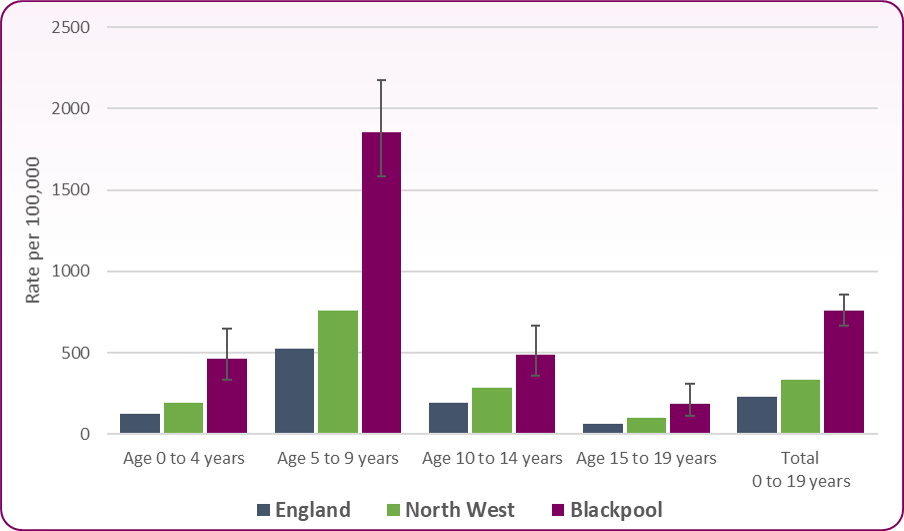
- The rate of tooth extraction due to dental decay is highest in five to nine year olds and Blackpool's rate of 1856.9 per 100,000 is over three times higher than the England average of 527.5 (figure 8)
Figure 7: trend in % of population aged 0-19 admitted to hospital for tooth extraction, Blackpool, England and North West
 Source: OHID Hospital tooth extractions in 0 to 19 year olds 2024, February 2025
Figure 8: hospital admissions for tooth extraction with caries as primary diagnosis by age group in Blackpool, North West and England, rates per 1000,000 pop., 2023/24
 Source: OHID Hospital tooth extractions in 0 to 19 year olds 2024, February 2025
Dental health data for adults is unavailable at a local level but information from the Adult Oral Health Survey 2023 showed:
-
- Two thirds (65%) of adults reported they had very good or good oral health. A quarter (24%) reported they had fair oral health and 11% reported they had bad or very bad oral health
- 97.5% of adults in England had at least one natural tooth (were dentate). Dentate adults had on average 26 natural teeth
- 71% of adults with natural teeth brushed their teeth at least twice a day, in accordance with the current guidance. Just over half of adults (51%) who brushed their teeth used an electric toothbrush
- Just over half (51%) of adults said they went to the dentist for regular check-ups, 10% went for occasional check-ups and 35% went to the dentist only when they had trouble with their mouth, teeth or dentures
- A third of adults (30%) said that the cost of dental care had affected the type of dental care or treatment they had received. Just under a quarter (23%) of adults reported they had had to delay dental care or treatment because of the cost
- Nearly half of all adults (49%) said they had experienced one or more oral health impacts in the previous 12 months. The most commonly reported impacts were being self-conscious (27%), finding it uncomfortable to eat any foods (27%) and having had painful aching in their mouth (25%)
- Just over a fifth (22%) of adults reported at least one severe oral impact that had affected their daily life in the previous 12 months. Those activities that were most likely to be severely impacted were difficulty eating, and avoiding smiling, laughing and showing teeth without embarrassment
NHS Dental Activity from NHS Business Services Authority for adults in Blackpool showed:
-
- Just over 48,000 adults were seen by an NHS dentist in the two years to March 2025
- 41.2% of adults received NHS dental care in the 24 months to March 2025. This compares to 40% nationally
- Over a third (35%) of the activity carried out in Blackpool was for band 3 treatment (complex treatments including crowns, dentures and bridges) and urgent treatment (to prevent significant deterioration or address severe pain). In comparison 30% of activity across England was for band 3 and urgent treatment
Local user views
The GP Patient Survey (2025) asks about patients' experiences of local NHS services. Feedback about NHS dental services across Lancashire and South Cumbria showed that:
-
- 79% of people already registered with an NHS dentist reported that they were successful in getting an NHS dental appointment
- 8% reported no appointments were available, 10% were not able to have an appointment as the dentist was not taking on new patients
- 43% rated their experience of NHS dentists as 'very good' and 29% as 'fairly good'; conversely 11% stated it was 'ver poor'
- Of patients who have not tried to get an NHS dental appointment, just under a fifth (24%) thought they couldn’t get one, 5% said NHS dentist costs were too expensive and 27% are seeing a private dentist
Risk factors
Risk factors for oral diseases include: poor diet, tobacco, alcohol, poor oral hygiene, lifestyle and, as with all non-communicable chronic diseases, there are strong social determinants. Dental decay is the most common food-related disease which affects all families and which has a parallel impact to that of diabetes, obesity and heart disease.
Populations living in relatively deprived circumstances are most at risk of poor dental health. It is these populations who are most likely not to have a dentist or not to visit the dentist regularly. These groups are also more likely to have poorer diets high in sugar and sugar-sweetened beverages, to consume alcohol in quantities above recommended limits and to smoke. This is why they are known to be at particular risk, though in some cases, other factors come into play such as low usage of toothpaste, particularly fluoride toothpaste and ineffective or inconsistent tooth brushing techniques and routines. Blackpool experiences considerable levels of disadvantage, with low intake of fruit and vegetables and high levels of smoking and alcohol consumption.
Sugar plays a harmful role in oral health and consuming too many foods and drinks high in sugar can lead to tooth decay.6 Soft and fizzy drinks can be high in sugar, with consumption of sugar sweetened drinks particularly high in school age children as well as the most disadvantaged, who also experience a higher prevalence of tooth decay. Data from the Blackpool Lifestyle Survey 2024 shows that 20% of primary pupils drink fizzy drinks 'on most days', though three quarters (76%) reported cleaning their teeth twice a day.
National and local guidance
Blackpool's Oral Health Strategy 2023-2028 aims to reduce the prevalence of, and the resultant risks, from poor oral health.
NHS England, Our plan to recover and reform NHS dentistry, February 2024, sets out a national programme of actions for the recovery and reform of NHS dentistry services in England.
OHID, Oral health, February 2025, provides information and resources to improve oral health and reduce inequalities in England
Department of Health & Social Care, Delivering better oral health (June 2014, updated 4th edition 2021) is an evidence based toolkit to support dental teams in improving their patients' oral and general health.
Public Health England's Commissioning better oral health for children and young people (June 2014) provides an evidence-informed toolkit for local authorities.
NICE guideline [PH55] Oral health: local authorities and partners (Oct 2014) covers improving oral health by developing and implementing a strategy that meets the needs of people in the local community.
NICE quality standard [QS139] Oral health promotion in the community (Dec 2016) covers activities undertaken by local authorities and general dental practices to improve oral health and focuses on people at high risk of poor oral health or who find it difficult to use dental services.
Healthwatch Blackpool, Blackpool Dental Access, Healthwatch Blackpool carried out a mystery shopping exercise in July 2024 and rang all Blackpool dental practices, using the NHS Service Search (Sept 2025).
Blackpool oral health schemes
Public health in Blackpool currently commissions a suite of evidence based oral health improvement strategies for children and young people. These are evidence based interventions to improve oral health inequalities and include:
- Supervised tooth brushing in primary school reception classes, nurseries and child minders
- Milk fluoridation scheme
- Tooth paste and tooth brush distribution
- Dental epidemiology surveys
Supervised tooth brushing scheme
There is much evidence that application of fluoride toothpaste to teeth can reduce dental decay, and that children in deprived areas are less likely to brush their teeth twice daily.7 In 2014 PHE and the National Institute for Health and Care Excellence (NICE) issued evidence-based guidance indicating that supervised tooth brushing programmes in the childcare setting are effective and cost-effective for the prevention of tooth decay.1, 8
A supervised tooth brushing scheme has been in place in Blackpool’s children’s centres since 2016, aimed at improving oral health skills in 2–4 year olds. In March 2017, the Better Start programme rolled out a toolkit for nurseries and child minders to initiate supervised tooth brushing in their own settings and in 2022 the programme was opened to reception classes in primary schools.
The tool kit provides childcare settings with everything they need to brush their children’s teeth for a year:
-
- toothbrushes
- fluoride toothpaste (1350-1500ppm)
- a storage system
- step-by-step guidance detailing appropriate quantities of toothpaste to be used and infection control procedures.
Childcare providers are asked to commit to continue the scheme beyond the initial 12 months (at a cost of approximately £1.70/child/year).
The scheme is expected to reach approximately 3,000 children in Blackpool and it is hoped that children who take part in the scheme will encourage behavioural changes within the family, benefitting the wider community.
Milk fluoridation scheme
The World Health Organization (WHO) recommends fluoride milk as being effective in reducing the incidence of dental decay9. In November 2016, Blackpool Council introduced a fluoridated milk scheme as an additional vehicle for fluoride administration in the town, to contribute towards improving the high prevalence of dental caries in children. Fluoridated milk is offered to all children in Years 1-6 in Blackpool primary schools. Parents were provided with information on fluoridated milk, and were able to decline inclusion in the scheme if they preferred their children to receive non-fluoridated milk.
The scheme delivers in excess of 11,000 breakfasts daily and as part of the scheme all children are offered free school milk to drink (1/3 pint per day). Approximately 76% (8,400) of the 11,000 children were drinking semi skimmed milk in 2021. Since April 2021, approximately 54% of all school milk ordered is fluoridated milk, meaning approximately 4,500 children are drinking fluoridated milk on a daily basis.
Members of the public health team continue to monitor uptake and are working to support schools. For more information on the scheme visit Blackpool Council, Fluoridated milk scheme.
Advice to be given
Children aged up to three years
- Breast feeding provides the best nutrition for babies
- From six months of age infants should be introduced to drinking from a free flow cup and from age one year feeding from a bottle should be discouraged
- Sugar should not be added to weaning foods and drinks
- Parents/carers should brush or supervise tooth brushing
- Brush twice daily with a with any fluoride toothpaste containing 1,350-1,500ppm fluoride
- Brush last thing at night and on one other occasion
- It is good practice to use a smear of toothpaste, to spit out after brushing and not rinse (this maintains flouride concentration levels in the mouth)
- Take children to the dentist when their first milk teeth appear
- The frequency and amount of sugary food and drinks should be reduced and kept to meal times
- Sugar–free medicines should be recommended
Children aged three to six years
-
- Brush at least twice daily with a with a fluoride toothpaste containing 1,350-1,500ppm fluoride
- Brush last thing at night and on one other occasion
- Use any fluoridated toothpaste containing 1,350ppm fluoride or more
- Parents/carers should brush or supervise tooth brushing
- It is good practice to use only a pea-sized amount of toothpaste
- Spit out after brushing and do not rinse, to maintain fluoride concentration levels in the mouth
- The frequency and amount of sugary food and drinks should be reduced
- Sugar–free medicines should be recommended
Young people and adults
- Brush at least twice daily with a fluoride toothpaste containing 1,350-1,500ppm fluoride
- Brush last thing at night and on one other occasion
- Use any fluoridated toothpaste (1,350-1,500ppm fluoride)
- Spit out after brushing and do not rinse, to maintain fluoride concentration levels in the mouth
- The frequency and amount of sugary food and drinks should be reduced and kept to meal times
[] OHID, Child oral health: applying All Our Health March 2022
[] OHID, Oral health, February 2025. Information and resources to improve oral health and reduce inequalities in England
[] PHE, Inequalities in oral health in England, March 2021
[] OHID, Hospital tooth extractions in 0 to 19 year olds: short statistical commentary 2023, February 2024
[] Royal College of Surgeons, Faculty of Dental Surgery, The state of children's oral health in England, 2015
[] PHE, Sugar Reduction, The evidence for action, October 2015
[] PHE, Health matters: child dental health, June 2017
[] NICE 2014. Oral health: local authorities and partners (PH55)
[] WHO 2009. Milk fluoridation for the prevention of dental caries