Chronic obstructive pulmonary disease (COPD)
Last Modified 20/07/2026 13:23:55
Share this page
Introduction
Chronic obstructive pulmonary disease (COPD) is a type of lung disease characterised by chronically poor airflow. COPD typically worsens over time; the main symptoms include shortness of breath, cough, and sputum production. Tobacco smoking is the most common cause of COPD and the biggest preventable risk factor. Smokers can often dismiss the early signs of COPD as a ‘smoker’s cough’, but if they continue smoking and the condition worsens, it can greatly impact on their quality of life. Early detection and abstinence from smoking can reduce or prevent damage to the lungs. There are other factors such as air pollution and genetics playing a smaller role in the development of COPD.
Facts and figures
Prevalence of COPD
For further information regarding the source of QOF prevalence data and its limitations please see the note on QOF data page.
In 2024/25, 6,979 people (all ages) in the Blackpool ICB sub-location (formerly NHS Blackpool CCG) were identified as living with COPD.1 This equates to 3.9% of the population, which is significantly higher than England (1.9%). It is likely this is an under-estimate of prevalence across the authority.
Blackpool's sub-location is shown as a purple maker in figure 1, with all other sub-locations across England shown in blue. Blackpool has the highest rate of COPD in England.
Figure 1 - COPD prevalence funnel plot analysis at sub-ICB level (2024/25)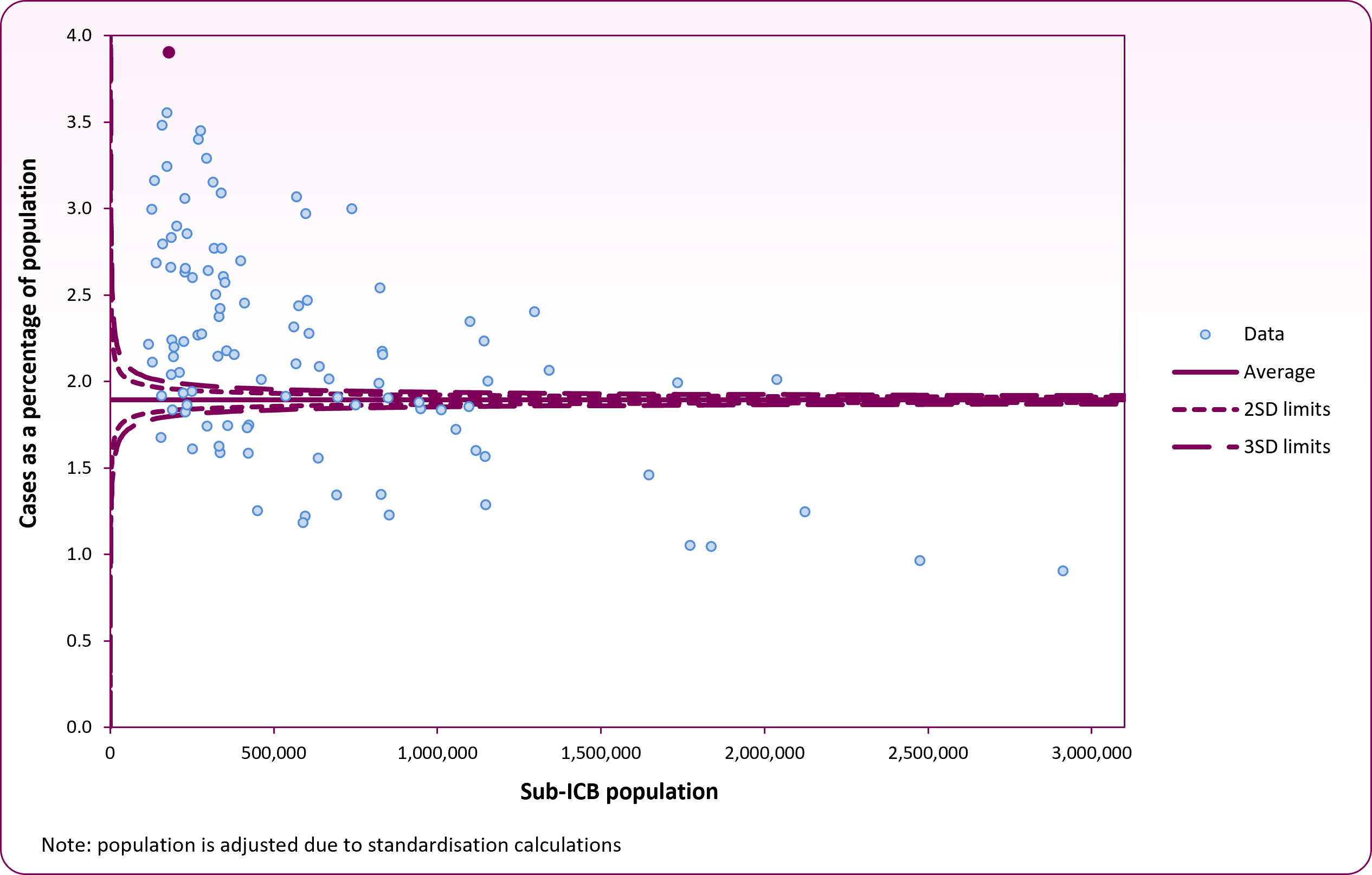 Source: Quality Outcomes Framework (QOF)
Hospital activity
In the period 2013/14 to 2024/25, each year there were an average of 707 emergency hospital admissions due to COPD for Blackpool's GP registered population (all ages). The 2024/25 rate of 361.9 (per 100,000 registered population) is 80 percentage points higher than the national rate of 201.1 per 100,000. The rate for both England and Blackpool have fallen slightly, although Blackpool's overall trend shows the rate is increasing and getting worse.2
There may be a number of reasons for the reductions and increases in admissions in recent years: patients may have been deterred from seeking help during the pandemic, lockdown measures may have reduced exposure to pollutants and other respiratory viruses, and patients admitted to hospital may not have had COPD recorded as their primary diagnosis (for example, where the primary diagnosis was COVID-19).3
Mortality from COPD
Between 2022 and 2024 there were 402 deaths in Blackpool where COPD (including bronchitis, emphysema and other COPD) was a cause, an average of 134 deaths each year. The directly standardised mortality rate (per 100,000 population) is calculated to allow comparison between geographies of different population sizes and with different sex and age make ups. Figure 2 shows that the rate of mortality caused by COPD, is significantly higher in Blackpool (86.6 per 100,000) than the national average of 45.5 per 100,000. Blackpool has the fourth highest rate in England.
Figure 2 - mortality from COPD, persons, 2022 to 2024 - lower tier local authorities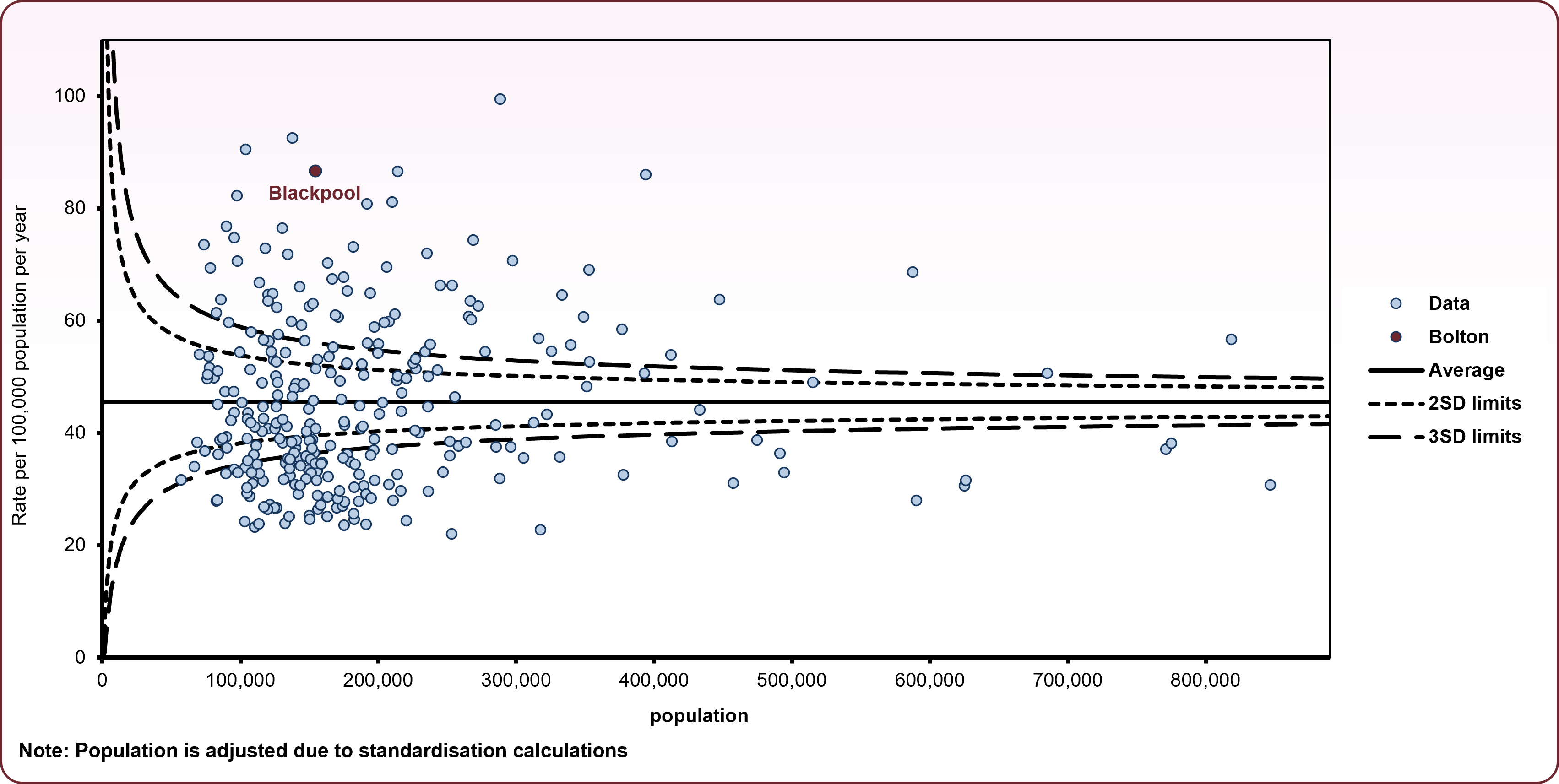 Source: Office for Health Improvement and Disparities, Mortality Profile
Figure 3 shows the annual trend in mortality from COPD, comparing Blackpool to England and the North West (2001-03 to 2022-24). While there is fluctuation in the Blackpool rate due to the relatively small numbers of deaths where COPD is recorded as a primary cause, the mortality rate in Blackpool has been significantly higher than the England rate over the period reported. There was an overall increasing trend in Blackpool's COPD mortality rate between 2007-09 and 2016-18, whilst the national trend was stable. In COVID-19-affected 2019-21 the national, regional and local mortality rates fell, possibly in part due to reduced transmission of viruses and exposure to pollutants over this period. The national, regional and local rates are following a similar pattern, with slight increases seen over the past three time periods 2020-22 to 2022-24.
Figure 3 - trend in COPD mortality 2001-03 to 2022-24 (persons, all ages), Blackpool and England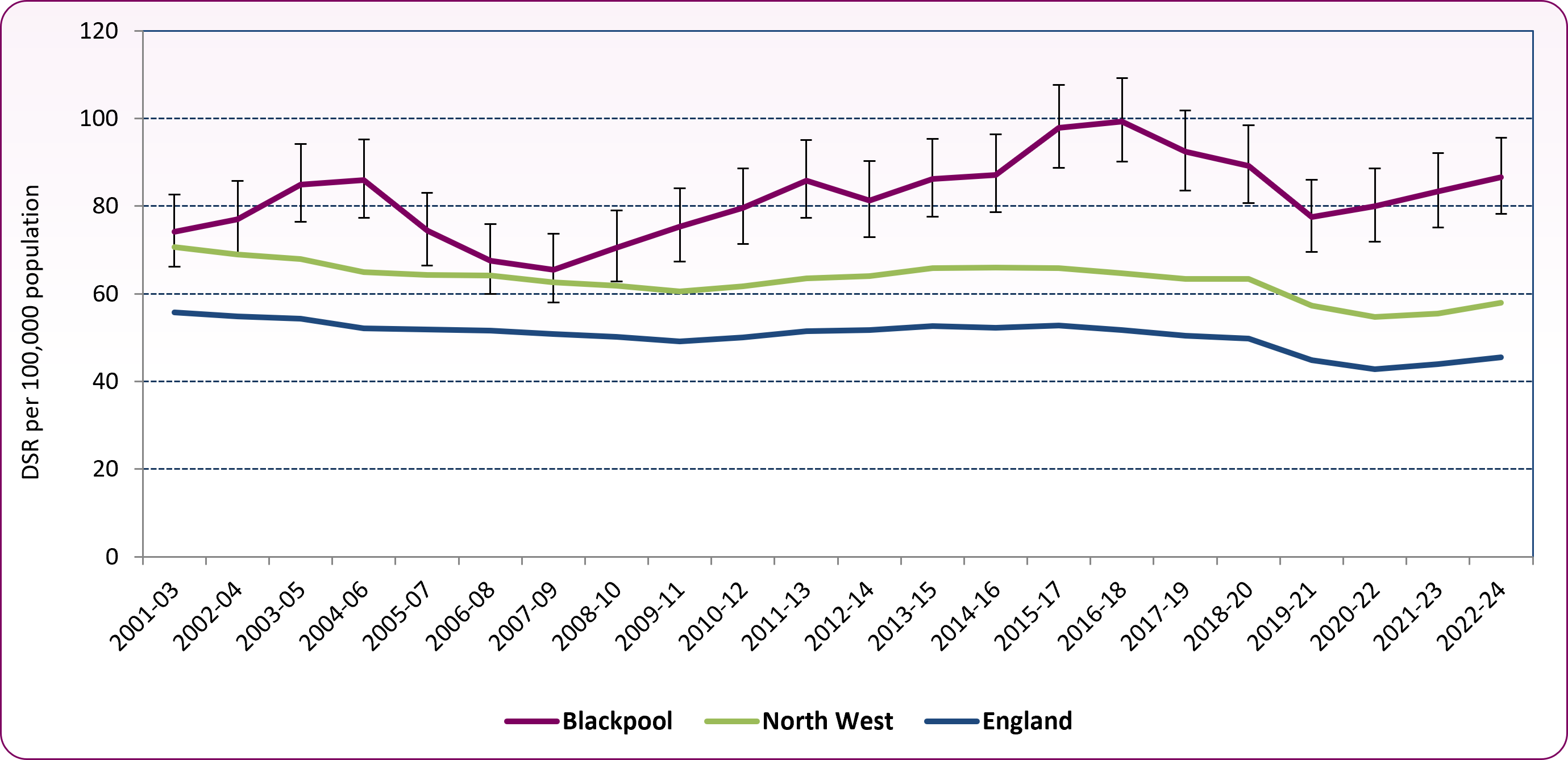 Source: Office for Health Improvement and Disparities, Mortality Profile
Figure 4 shows the difference in mortality rates from COPD for males and females. Blackpool does have significantly higher mortality rates than the England averages, and the rates are higher in males than females at the local,regional and national level.
Figure 4 - mortality from COPD, males and females, England, the North West and Blackpool, 2022-24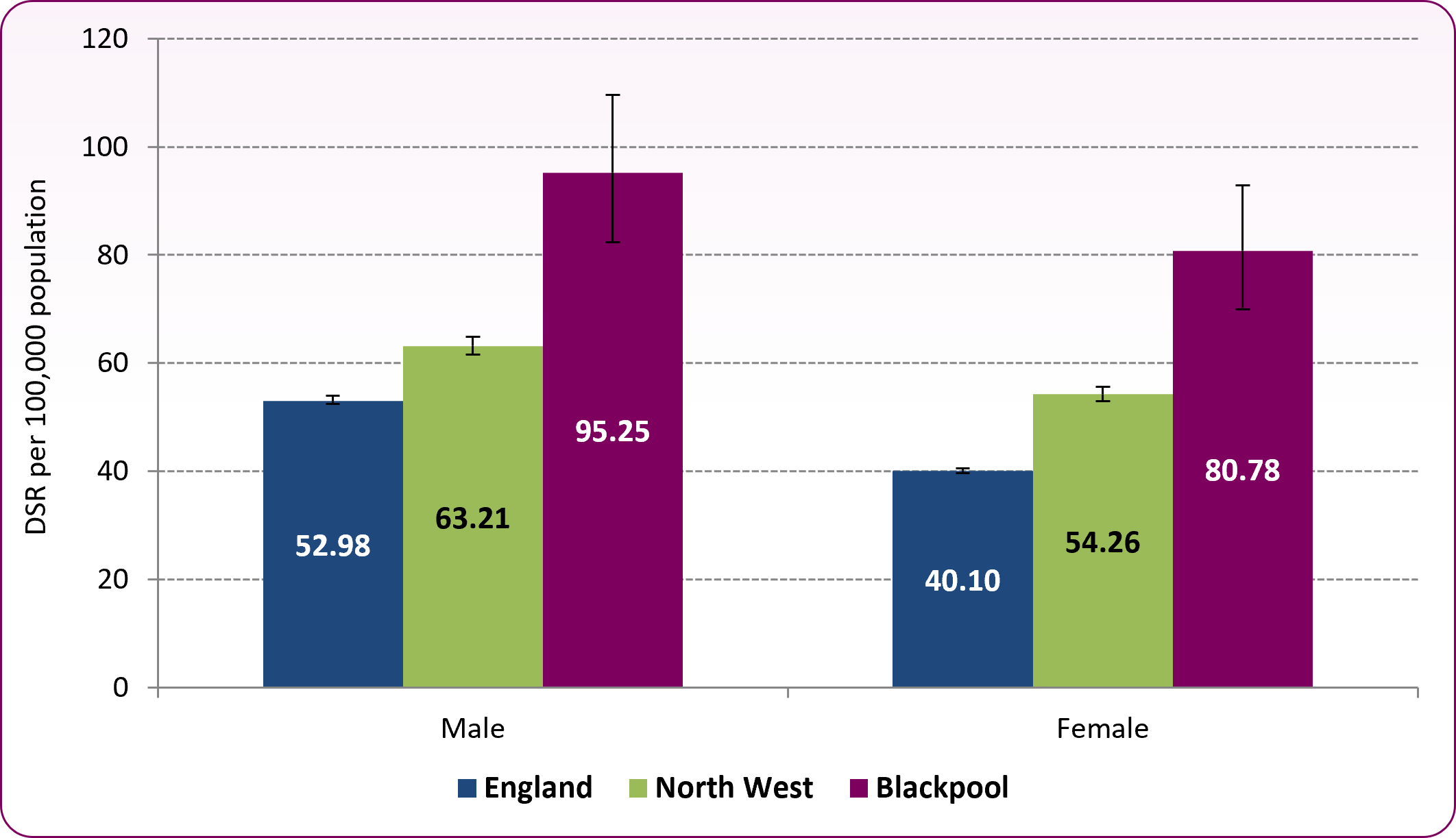 Source: Office for Health Improvement and Disparities, Mortality Profile
National and local strategies (current best practices)
Risk factors
Smoking is the main cause of COPD and is thought to be responsible for around 90% of cases. The lining of the airways becomes inflamed and permanently damaged by smoking and this damage cannot be reversed. Up to 25% of smokers develop COPD. Exposure to other people's smoke through passive smoking increases the risk of COPD.4
[] Office for Health Improvement & Disparities, Respiratory Disease profile.
[] OHID, Respiratory Disease profile.
Nuffield Trust (2021) Emergency admissions for asthma and COPD during Covid-19.
NHS Choices, chronic obstructive pulmonary disease